


MORE TERPENES
Our friends over at Green Camp have offered to share a new article with all of our SPR readers and we were more than happy to spread the knowledge about our favorite flavor makers: Terpenes!
There will be some overlap with the info and chart in this original article, but there is certainly plenty of new interesting facts to learn and about twice as many terpenes to get to know. Check out this cool infographic they've created to get the basics, and then head over to their site for the full article.
Source:greencamp.com
What exactly are the essential oils that we are extracting from the cannabis plant, and what are their properties?
Here is a nifty list that I scored off ICMag, posted by Spurr, who used /blog-images/http://cannabis-med.org/data/pdf/2001-03-04-7.pdf as his information source:
?-9-tetrahydrocannabinol (THC) Boiling point: 157C / 315 degree Fahrenheit ( Merck 200C @0.02). Properties: Euphoriant, Analgesic, Antiinflammatory, Antioxidant, Antiemetic
Cannabidiol (CBD) Boiling point: 160-180*C / 320-356 degree Fahrenheit Properties: Anxiolytic, Analgesic, Antipsychotic, Antiinflammatory, Antioxidant, Antispasmodic
Cannabinol (CBN) Boiling point: 185*C / 365 degree Fahrenheit Properties: Oxidation, breakdown, product, Sedative, Antibiotic
Cannabichromene (CBC) Boiling point: 220*C / 428 degree Fahrenheit Properties: Antiinflammatory, Antibiotic, Antifungal
Cannabigerol (CBG) Boiling point: MP52 Properties: Antiinflammatory, Antibiotic, Antifungal
?-8-tetrahydrocannabinol (?-8-THC) Boiling point: 175-178*C / 347-352.4 degree Fahrenheit Properties: Resembles ?-9-THC, Less psychoactive, More stable Antiemetic
Tetrahydrocannabivarin (THCV) Boiling point: < 220*C / <428 degree Fahrenheit Properties: Analgesic, Euphoriant
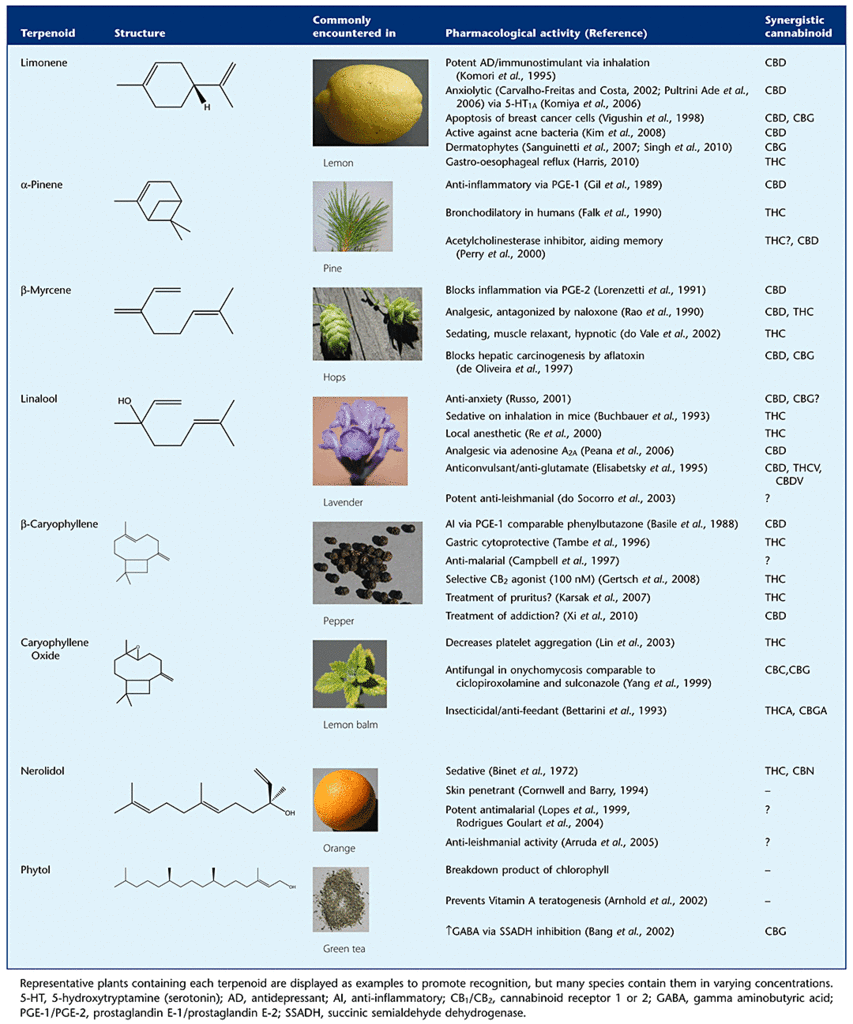
Terpenoid essential oils, their boiling points, and properties
ß-myrcene Boiling point: 166-168*C / 330.8-334.4 degree Fahrenheit Properties: Analgesic. Antiinflammatory, Antibiotic, Antimutagenic
ß-caryophyllene Boiling point: 119*C / 246.2 degree Fahrenheit Properties: Antiinflammatory, Cytoprotective (gastric mucosa), Antimalarial
d-limonene Boiling point: 177*C / 350.6 degree Fahrenheit Properties: Cannabinoid agonist?, Immune potentiator, Antidepressant, Antimutagenic
linalool Boiling point: 198*C / 388.4 degree Fahrenheit Properties: Sedative, Antidepressant, Anxiolytic, Immune potentiator
pulegone Boiling point: 224*C / 435.2 degree Fahrenheit Properties: Memory booster?, AChE inhibitor, Sedative, Antipyretic
1,8-cineole (eucalyptol) Boiling point: 176*C / 348.8 degree Fahrenheit Properties: AChE inhibitor, Increases cerebral, blood flow, Stimulant, Antibiotic, Antiviral, Antiinflammatory, Antinociceptive
a-pinene Boiling point: 156*C / 312.8 degree Fahrenheit Properties: Antiinflammatory, Bronchodilator, Stimulant, Antibiotic, Antineoplastic, AChE inhibitor
a-terpineol Boiling point: 217-218*C / 422.6-424.4 degree Fahrenheit Properties: Sedative, Antibiotic, AChE inhibitor, Antioxidant, Antimalarial
terpineol-4-ol Boiling point: 209*C / 408.2 degree Fahrenheit Properties: AChE inhibitor. Antibiotic
p-cymene Boiling point: 177*C / 350.6 degree Fahrenheit Properties: Antibiotic, Anticandidal, AChE inhibitor
Flavonoid and phytosterol components, their boiling points, and properties
apigenin Boiling point: 178*C / 352.4 degree Fahrenheit Properties: Anxiolytic, Antiinflammatory, Estrogenic
quercetin Boiling point: 250*C / 482 degree Fahrenheit Properties: Antioxidant, Antimutagenic, Antiviral, Antineoplastic
cannflavin A Boiling point: 182*C / 359.6 degree Fahrenheit Properties: COX inhibitor, LO inhibitor
ß-sitosterol Boiling point: 134*C / 273.2 degree Fahrenheit Properties: Antiinflammatory, 5-a-reductase, inhibitor

CBD
I like Swiss CBD oils the most; they have a perfect profile of cannabinoids and terpenes. Then you eat these products; you can feel the pain-relieving and soothing effects. Recently I used CBD oils against joint pain, and this method is better than pills. https://alpinols.com
Whatsapp: +195.464.18238 Open link https://sites.google.com/view/nembutal-pentobarbital-sodiums Buy Xanax bars , Lean syrup , Oxycodone , Adderall , Percocet , Methadone , Ecstasy , Lsd and acid , Actavis Promethazine Cough Syrup , Viagra , Vyvanse , Klonopin , Fentanyl , Rohypnol (Roofies) , Ketamine , Hydrocodone 10/325, MDMA (molly) crystal and pill form , Crack Cocaine , Heroin (white, brown and tar) Weed , Marijuana , Cannabis buy in Switzerland , Germany , Spain , Italy , Strawberry , Sour Diesel , Jack Herer , Durban Poison , Haze, Pineapple Express , Blue Dream , Purple Haze , AK-47 , Grapefruit , White widow , OG Kush , Purple Kush , Black weed , CBD Oil , Hemp oil , Moonrock for sale in Switzerland , Germany , Spain , Italy ,E-mail: danny@ doctor. com https://onlinecannamedshop.com
For those looking for a US source of Lab Tested Terpenes, www.elevationterpenes.com is a great resource. Myrcene, CBD and many other products are there
this is a cool article! Thanks... I was always wondering about the temperatures when vaping, since I got this new vaporizer. I'm writing about vaping CBD, if you want, check my web https://cbd-vape-eliquid.com/
IS DYLAN LOOKING AT THIS? FOUND IT
Hi! Someone in my Myspace group shared this site with us so I came to look it over. I'm definitely loving the information. I'm book-marking and will be tweeting this to my followers! Fantastic blog and excellent style and design.
Ty
[…] etc.… before adding to any recipe. As the various cannabinoids, terpenoids, and flavonoids all have a different boiling point, they can be destroyed if heated too high or for too […]
[…] Skunk Pharm Research, Cannabinoid and Terpene Info; http://skunkpharmresearch.com/cannabinoid-info/ […]
[…] Skunk Pharm Research, Cannabinoid and Terpene Info; http://skunkpharmresearch.com/cannabinoid-info/ […]
[…] theory, you can run the device at the boiling point of delta-9-THC for a while, boil off that psychoactive compound (and anything that volatizes below […]
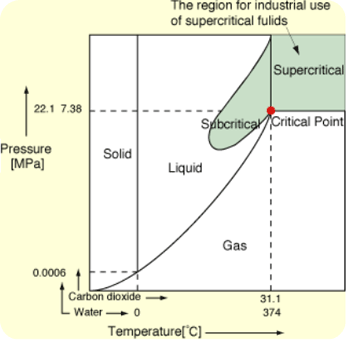
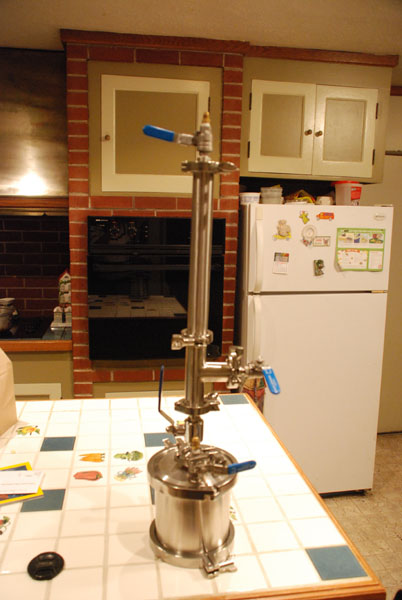
I do not fully understand the temperatures listed in the table in light of my own observations. The boiling temps under a standard atmosphere seem to be MUCH higher when the elements of the mixture are heated up together as I do when I create POHO (red hash oil). If you have never tried fully realized red oil (POHO!) then boy howdy are you in for a treat. Nothing I have tried compares. I can easily maintain a temp of 365F in the final stages of preparation without the mixture of oil boiling though this must be approached with caution. Heating too fast or too much has destroyed much extract before I learned how to do this correctly. Zero solvents after the supercritical extraction for red POHO, and alcohol wash to make sunshine POHO. The final product is liquid at room temp and stores well in a syringe applicator in the refigerator. Even refigerated the finished oil is easily dispensed with a syringe applicator. https://vimeo.com/170356666?utm_source=email&utm_medium=vimeo-cliptranscode-201504&utm_campaign=28749
You're working with melting. Not boiling
[…] Cannabinoid and Terpene Info […]
[…] Cannabinoid and Terpene Info After Healing His Own Cancer With Cannabis, This Self-Taught Doctor Cured Over 5000 […]
[…] Skunk Pharm Research, Cannabinoid and Terpene Info;http://skunkpharmresearch.com/cannabinoid-info/ SC Labs, Meet the Cannabinoids; http://www.scanalytical.com/the-cannabinoids.html Centers for […]
[…] and Terpene Info Posted by Skunk Pharm Research,LLC. What exactly are the essential oils that we are extracting from the cannabis plant, and what are […]
I have been looking everywhere to find out where on the plants the concentrations of CBD and THC are located. My best understanding now is the the vast majority of THC is secreted to the outside of the plant flowers (i.e. trichomes) with some on the surface of the leaves closest to the buds. I assume there is still some THC remaining inside of the leaves but have no idea of approximately how much? Secondly, I are the CBD contained on the inside of the plant structure as apposed to being on the surface? Your help in figuring this out would be of great help in forming some clarity.
Just a quick note. I have been using "kleenextract". Fantastic product. Claim is that it is made from organic material. Certainly, everclear is not. And I cannot buy the 190 where I live. Even with shipping it is less expensive than Everclear if purchased in gallons and can be ordered in 5 gals also. Fed taxes are included. Some say states require a form.
What temperature oil bath to decarboxylate a high cbd strain? On normal strains I use 250f
We use the same 250F.
[…] Skunk Pharm Research, Cannabinoid and Terpene Info; http://skunkpharmresearch.com/cannabinoid-info/ […]
When you are trying to find adult porn social signals, then look at buying our adult social signal package. It really is the top approach to get larger search rankings on-line should you be a porno internet site webmaster.
It is important to note that for the cannabinoids and sesquiiterpenes, the published boiling points are all at reduced pressure, on the order of 50 torr or less. Example: limonene boils at 177 C at 1 atm, but the value given for caryophyllene (a terpene with a larger and heavier mo-lecular structure) is a mere 119 C. Indeed, Wikipedia lists the BP of caryophyllene as 128 - 129 C at 14 torr - or about 1.8% atmospheric pressure. This includes the cannabinoids. To suggest that THC, a molecule twice the size of the aforementioned limonene, boils 20 C lower, is preposterous. For these heavier compounds, a melting point and vapor pressure (as % of atm) at a given temperature is more useful information for the consumer looking to dial in their vaporizer temps.
In more conventional terms, the boiling point of a material is related to pressure. This is why vacuum purging for BHO and HHO is used - by reducing the boiling point of the solvent, it evaporates faster and more completely. In concentrate manufacture, it's a constant battle to remove solvent and preserve terpenes, as both are volatile and boil at lower temperatures under reduced pressure. Thoroughly purged BHO often lacks the intense bright presence of monoterpenes (myrcene, pinene, limonene and linalool are most abundant in my experience) that a more careful purge would leave behind. Most of the sesquiterpenes and cannabinoids (and the flavinoid-type compounds listed at the end) decompose before they reach their effective boiling point at regular air pressure, which is why a vacuum boiling point is listed instead.
What is the lowest temp you could use to still decarb THCA into THC and still keep most to all the terps? I was thinking a sous vide at 110f for several hours. Does this sound like the right path? Thanks.
I use sous vide at 200F for 1hr 20min. Ground product goes into canning jars which are held down under the water with a brick. I watched a video of a guy doing this, sorry don't remember the link, and he showed test results. So that's what I do and it works.
https://www.youtube.com/watch?v=meWaG19PL4o Marijuana Growers HQ presents a lab tested and proven method for decarboxylating cannabis using sous-vide. For the full article as well as others tips and tricks please visit our site. www.marijuanagrowershq.com
Any chance you might take a look at vaporizers for flowers rather than concentrates?
[…] Skunk Pharm Research, Cannabinoid and Terpene Info;http://skunkpharmresearch.com/cannabinoid-info/ SC Labs, Meet the Cannabinoids; http://www.scanalytical.com/the-cannabinoids.html Centers for […]
[…] Skunk Pharm Research, Cannabinoid and Terpene Info; http://skunkpharmresearch.com/cannabinoid-info/ […]
Is it possible to isolate CBN and add it to your THC oil to act as a potentiater for the psychoactive properties? Just like you could do with terpenes?
In theory, yes. In practice? Very difficult. Isolating pure CBN would be very difficult without using the proper equipment, such as column chomatography. Even then there is the possibility that adding it to THC oil would have little to no effect. I also don't know why you would want to add CBN to THC oil anyway, CBN is a breakdown product of THC, it has less (if any) psychoactive properties than THC.
Based on the boiling point info it seems like it would be possible to isolate THCV from the other most significant psychoactive cannabinoids by making an extract from AVB that had been vaped thoroughly at somewhere between 366 and 427 degrees F
That is a really good idea. : ) However, an important factor about vaping is that it involves bringing cannabis up to oven temperatures(366 ~ 427). When vaping at these temperatures, it is only a matter of time before all active ingredients are cooked and useless. Therefore, depending on the duration of vaping that lasts at those temperatures, the THVC may or may not be preserved well in the AVB.
Thanks for the feedback. I have a dwindling supply of Jack the Ripper acquired from a reputable medical supplier and I have been keeping the AVB from that batch separate from the rest of my AVB. When the bag is empty I guess I should do a long soak in everclear and then make it into oil and send it off for testing. There won't be much oil though, as the AVB started off as a 10g bag (about 3g left currently, but I can't vape for a while as I've come down with a cold and am sticking to edibles until my cough is all better). Does anyone reading this have any idea what the minimum amount of oil would be needed to send to a lab for effective testing? Its not something I've done before, but this seems like an interesting enough topic to blow some oil and money on, the results might even end up proving more amusement than the lost oil would have. Also if anyone has a suggestion for the best lab to send to I'd like to know about that. I'm in Portland if that makes a difference, as I just realized you could probably get into deep federal shit for mailing a sample to a lab and maybe hand delivering would be a safer idea.
[…] * Skunk Pharm Research, Cannabinoid and Terpene Info; http://skunkpharmresearch.com/cannabinoid-info/ […]
Hi their reading up a lot on this and experimenting with adding some terpenes back to my ISO oil for flavour. I always got complemented on the look and smokeability of my ISO just I've always found due to the higher purging temps I can never get it to taste good. Just looking around and was trying to find what terpenes give kush that distinctive kushy aroma. Wondering if you had any experience or input on this.
[…] – Skunk Pharm Research, Cannabinoid and Terpene Info;http://skunkpharmresearch.com/cannabinoid-info/ – SC Labs, Meet the Cannabinoids; http://www.scanalytical.com/the-cannabinoids.html – […]
[…] Skunk Pharm Research, Cannabinoid and Terpene Info; http://skunkpharmresearch.com/cannabinoid-info/ […]
[…] Skunk Pharm Research, Cannabinoid and Terpene Info;http://skunkpharmresearch.com/cannabinoid-info/ […]
i need a formulation for a lung cancer patients that cant smoke or vaporize he mostly needs it for nausea from chemo , i make HAOO and HAOT for myself to treat chronic pain and fibromyalga have access to a mk3 , does it matter if im using nug run,trim or whole plant? i do all. would winterized then decabed in an oil bath and mix with liquid coconut oil say 10g bho to how much coconut oil ? would this work orally or capsule thanks in advance
How to get more ß-caryophyllene in the gastric mucosa? Saute some flowers in ghee and drink the ghee?