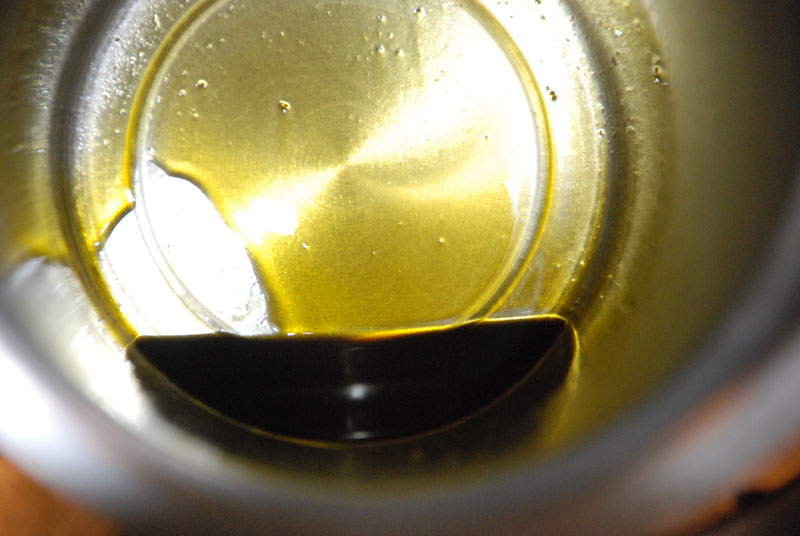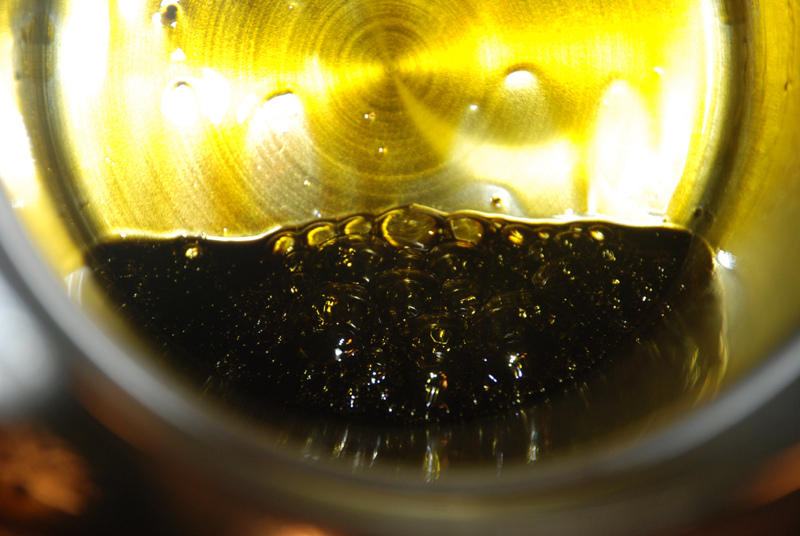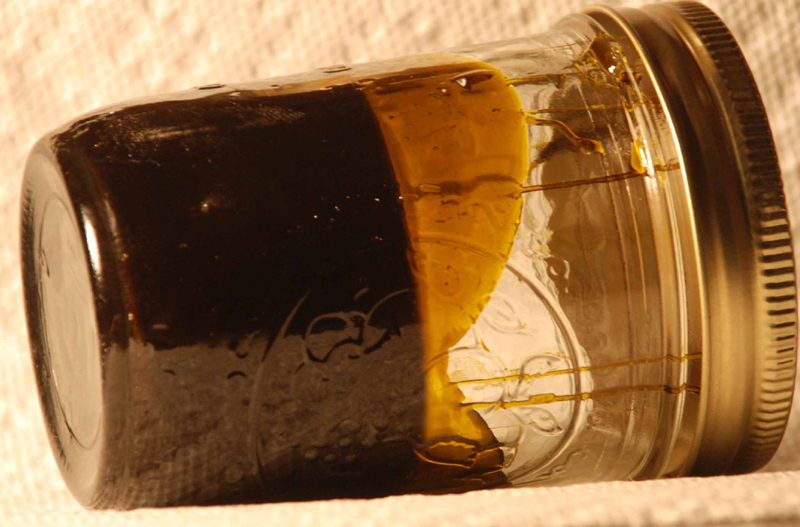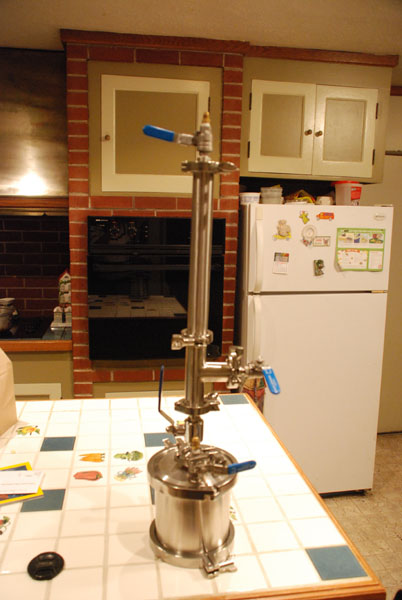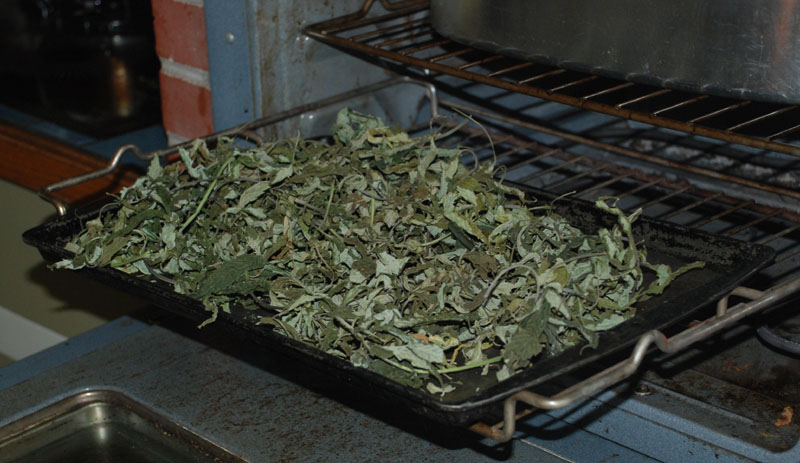


Butane Honey Oil, or BHO, is the essential oil from the cannabis plant, extracted using n-Butane as a solvent. If it is extracted from fresh material, it is a Concrete, and if from cured material, it is an Oleoresin. A concrete or an oleoresin that has been winterized to remove the waxes, lipids, and fats, is known as an Absolute.
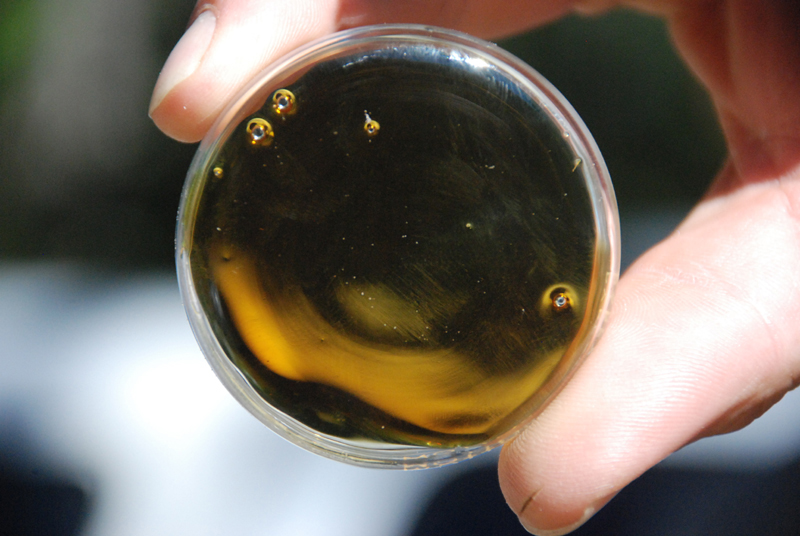
Butane Honey Oil extraction refers to the method used to extract the essential oils from cannabis, and there are multiple theories on the best way to accomplish this, as well as what material is best to use.
Perhaps the first question is why use a BHO technique to extract the resins, instead of just boiling the material in alcohol to get the greatest amount of extracted material?
The answer to that is that because butane is relatively non polar, it doesn’t extract the water solubles like chlorophyll and plant alkaloids. Butane produces one of the cleanest extractions, albeit typically at a lower yield than polar alcohol.
On average we have extracted about 18% oil by weight from bud, but as low as 5.7% absolute and as high as 25 absolute%.
The first wash will usually extract 75 to 80%, leaving the balance for the second after repacking the column. The second extraction will be more sedative and less heady. If you use a hand microscope, you can easily see when the trichome heads are gone and the stalks look like wet fur.
We’ve only tried a few processes here at the pharm, so I will cover only simple flow through columns, a thermos bottle, a pressurized system, and a closed loop one.
We currently use a closed loop system for BHO, and as I am covering that process on a separate thread named The Tepenator, where I will detail building our second generation automated system.
Prior to using our DIY closed loop system, we did our BHO extractions using single pass flow through packed columns, and experimented with a thermos and a simple pressurized system to soak at ambient temperature. I will cover simple columns and thermos bottles separately, as the techniques are different and I need to make some more pictures for the latter.
Before we discuss how to extract the essential oils from cannabis, let us talk about the plant material to be used. That immediately brings to mind the qualifying question, “What do you want to use it for?”
Oil that is to be vaporized, is normally treated differently than oil that is used orally or topically, because it doesn’t need to be decarboxylated. For cannabis concentrates to be orally and topically active, it does require that the THCA and CBDA be converted to THC and CBD, by a heating or drying process. I will cover that issue under a separate thread on Decarboxylation, so as to not clutter this post.
Terpenes:
Besides the cannabinoids, which are Di-Terpene alcohols and di-alcohols (diol), there are also other terpenes in cannabis essential oils, which add to its smell, flavor, and medicinal entourage effect. Some of these terpenes are highly aromatic alcohols, phenols, ketones, aldehydes, ethers, and esters, which are aromatic because they freely give off molecules at even ambient temperatures.
Heating the plant material or the oil to decarboxylation temperatures will evaporate off most of these smaller aromatic Mono-Terpene and Sesqui-Terpene molecules, before the larger and heavier cannabis Di-Terpenes are affected. Decarboxylated oil is smoother to the taste, but basically tastes like hash, with the floral undertones gone.
Gone also are the medicinal and entourage effects from those terpenes. The price we pay for decarboxylation, so we shouldn’t decarboxylate casually, and should first consider the end use before picking the process.
One of our process limitations, is that though non polar, n-butane has slight water solubility. At 20C/68F, it is only 0.0325 percent by vol/vol, but not zero and is still enough to pickup undesirable water solubles. 1 liter, or 1000 ml X 0.0325 = 32.5 ml of water.
With water, comes water solubles, which includes chlorophyll and plant alkaloids, that detract from the taste, so the dance is to maintain the volatile terpenes, while studiously avoiding the water solubles.
Freezing the water is one method that works well, but it is important that the material be dry when it was frozen and that it is not exposed to high humidity while frozen, or ice will form over the trichomes, preventing their extraction.
Another method is to simply remove most of the water. This will produce pristine extractions, but doesn’t preserve the terpenes. If the material is to be decarboxylated anyway, that is of little concern, because we will lose them anyway.
We also have the issue of purging out the remaining butane, while preserving the terpenes. Again, there are a number of ways to do that, but I will address only a few of the ways that have worked for us here. Those are light heat, high heat, and thin film vacuum.
So, besides decarboxylation, what are some of the things to consider selecting a process and how should the plant material be prepared?
In our experience, for best flavor and taste, freshest material works best, whether it is fresh frozen material or dried. Older cured material loses the nuances of the floral undertones and just tastes like hash. That means that the degree of drying and curing is also critical, if your goal is to maintain maximum terpene content.
Oil from buds is tastier than oil from even sugar trim, because most of the terpenes are produced by the buds, and that is where they are the most plentiful. Tasty is usually not a word used to describe oil from fan leaves or stems, though effective may be.
The absolutely most flavorful BHO extract to me personally and to the test panels thus far, is fresh picked buds, that are immediately frozen to tie up the water, and extracted while still frozen. It produces an oil that abounds in whimsical flavors darting about and the word most often used to describe it by panel members, was the word “fresh.”
Next most flavorful, from a BHO standpoint, is material that has only been cured 5 to 7 days, and is at the small stem snap stage, where you might jar it if you were curing it to smoke.
Part of the formula is of course the degree and methods used to purge out the remaining butane. While there are a number of ways to do that as well, I will address only a few of the ways that have worked for us here. Those methods are low heat, high heat, and thin film vacuum.
Butane supply:
Lastly, selecting a suitable butane source is a key step, in that all butane sources aren’t created equal. n-Butane (normal butane) is a simple alkane, with four carbon atoms linked together in a row, with the remaining possible carbon bonding sites taken up by hydrogen atoms.
The simple alkanes all are gaseous at room temperature and atmospheric pressure. They are removed from crude oil before it is further processed, by simple heating. The simplest is Methane, which is only on carbon and four hydrogen atoms, followed by Ethane with two carbons, Propane with three, and Butane with the four.
Pentane is the next simple alkane, the first to be liquid at room temperature and the first to have zero water solubility. From Pentane on, the simple alkanes are named from the Greek alphabet, and are Hexane, Heptane, Octane, etc, on through the light naphthas, oils, waxes, and asphalts.
The formula for all simple alkanes, is the number of carbon atoms times two, plus two, because each carbon atom has four possible bonding sites. A mnemonic device for remembering the first four alkanes, which were named before the Greek system was applied, is Mary Eats Peanut Butter.
After removal from the crude oil, the gases are typically de-sulfurized using steam and a catalytic reactive bed, and fractionally distilled into the four basic gases. As fractional distilling separates the gasses by specific gravity, the principal contaminants in n-Butane at that point, will be Iso-Butane, a branched molecule isomer of n-Butane, as well as n-Propane, and Cyclo-Propane, plus low levels of heavier, longer oleaginous alkane wax chains.
Neither of the butanes or propanes are particularly toxic at any sort of reasonable levels. The following for instance is taken from a typical MSDS sheet for n-Butane. The Rat LD-50 (50% dead) is 658000 mg/m3 4 hours. That is breathing a 65.8% pure butane atmosphere and asphixiating.
MSDS info:
Section 11. Toxicological information for n-Butane; Diethyl; Freon 600; Liquefied petroleum gas; LPG; n-C4H10; Butanen; Butani; Methylethylmethane; UN 1011; UN 1075; A-17; Bu-Gas.
Specific effects
Carcinogenic effects No known significant effects or critical hazards.
Mutagenic effects No known significant effects or critical hazards.
Reproduction toxicity No known significant effects or critical hazards.
No specific information is available in our database regarding the other toxic effects of this material to humans.
Chronic effects on humans May cause damage to the following organs: central nervous system (CNS).
Other toxic effects onhumans
Toxicity data
Butane LC50 Inhalation Vapor
Rat 658000 mg/m3 4 hours
Product/ingredient name Result Species Dose Exposure
Products of degradation: carbon oxides (CO, CO2) and water.
Section 12. Ecological information
Products of degradation :
Environmental fate : Not available.
Environmental hazards : No known significant effects or critical hazards.
Toxicity to the environment : Not available.
Aquatic ecotoxicity
Not available.
The MSDS LD-50s on Iso-Butane, Propane, Cyclo-Propane, and oleaginous waxes are as follows:
n-Propane; Dimethylmethane; Freon 290; Liquefied petroleum gas; Lpg; Propylhydride; R 290; C3H8; UN 1075; UN 1978; A-108; Hydrocarbon propellant. LC50 Inhalation Gas: Rat >800000 ppm 15 minutes
Cyclopropnane; Trimethylene; Trimethylene (cyclic); UN 1027; No LD-50 established;
Iso-Butane; 2-methyl-; Trimethylmethane; 1,1-Dimethylethane; 2-Methylpropane; isoC4H10; i-Butane; Isobutane mixtures; UN 1075; UN 1969; R 600a; tert-Butane; A 31;Methylpropane; Propane, 2-methyl-isobutane LC50 Inhalation Vapor Rat 658000 mg/m3 4 hours
Oleaginous Waxes- Paraffin, no notable toxicity or LD-50 available
n-Butane is used for any number of things, so it is processing beyond this point, or sharing storage tanks with other contaminated sources that may create health concerns. While n-Butane is non-toxic enough used as a food propellant, if it is to be used as a stove fuel, it will in most cases have an odorant added for leak detection, as n-Butane has only a very light sweet petroleum odor.
Ethyl Mercap is most often added for that purpose, and is the familiar rotten egg smell is detectable at the astonishing low concentration of under 3 parts per Billionth! Hexane (Gasoline) by comparison, has an odor threshold of around 30 parts per millionth, or about 10,000 times more is required for us to smell mercaptoethanol.
The MSDS for Ethyl Mercaptan shows 4420 ppm/4 hour(s) inhalation-rat LC50; 682 mg/kg oral-rat LD50, with the target organs being the central nervous system. Not super toxic, but tastes and smells of rotten eggs, so that point may be mute.
Butadiene may be added to stove fuel as well, and is of serious concern. While the following typical MSDS example shows relative low toxicity, take a look at the carcinogenic effects.
LD50 Oral Rat 5480 mg/kg -LC50 Inhalation Vapor Rat 285 g/m3 4 hours
LC50 Inhalation Vapor Rat 285000 mg/m3 4 hours
LC50 Inhalation Gas. Rat 128000 ppm 4 hours
Mutagenic effects No known significant effects or critical hazards.
Reproduction toxicity No known significant effects or critical hazards.
No specific information is available in our database regarding the other toxic effects of
this material to humans.
CARCINOGENIC EFFECTS: Classified 1 (Proven for humans.) by IARC, 1 (Known to
be human carcinogens.) by NTP, + (Proven.) by NIOSH, 1 (Proven for humans.) by
European Union. Classified A2 (Suspected for humans.) by ACGIH.
MUTAGENIC EFFECTS: Classified 2 by European Union.
May cause damage to the following organs: the reproductive system, mucous membranes, upper respiratory tract, skin, eyes, central nervous system (CNS).
n-Butane may also be further refined to increase its purity, or to make it suitable for use in butane lighters. R-600 Refrigerant and Instrument grade n-Butane are examples of higher purity n-Butane suitable for extractions, and are distributed by suppliers like Matheson and Airgas.
Lighter Butane:
As those sources are expensive and not usually available to non commercial customers, in support of federal guidelines listing it as a controlled substance used in the manufacture of illegal drugs, most folks use butane made for butane lighters.
Each manufacturers blend is slightly different, with n-Propane usually added as a propellant, because below the freezing temperature of water, butane is a liquid instead of a gas.
They also further refine the n-Butane to remove more of the low level oleaginous waxes, which clog the small orifices in expensive butane lighters. This is often shown on lighter butane cans as a number followed by an X. IE: 5X.
The common name for Oleaginous Waxes from petroleum, is Paraffin, which is non-toxic enough to have no known LD-50 data and be used to seal jelly jars, so they are of low concern when extracting.
Here Madison Avenue has gotten a foot hold, and even 7X butane is available for even more money, though there is no advantage over a good 4X for the purpose of extraction.
One refiner has started labeling the brand names that they produce, Near Zero Impurities, guaranteeing under 50ppm impurities. An independent test showed that they in fact are under 50 ppm, and even under the 15ppm testing cutoff, as were competitors brands not touting near zero impurities.
If using lighter butane, the safest course is to use tried and proven brands, but if forced to improvise, first obtain a MSDS sheet from that specific manufacturer, showing the contents. Reject any containing mercaps or Butadiene.
Ingredients less than 1% need not be shown on the MSDS sheet, unless they present a health risk at the levels present, so they are not all inclusive, but a good place to start.
If the MSDS looks OK, spray a five second burst on a mirror or clean glass pane and let it completely evaporate. Check for residue. Smell it for mercaps; you can’t miss them.
Each brand extracts slightly differently, because the mixes are slightly different. Adding propane for instance, increases water solubility and the propensity to pick up water solubles.
Here are some brands that we’ve tried and work well, as well as being tired and proven brands by others. This list is by no means inclusive:
Colibri
King
Lucienne
Newport
Vector
Safety:
Butane is highly flammable, so let us next talk about safety. First and foremost, always perform the extraction outside in a well ventilated area. Have a fire extinguisher handy, as well as a blanket to roll up in, should the unthinkable happen.
It goes without saying that smoking around a butane extraction is asking for a disaster, but I have literally grabbed the hand of folks starting to light up because they “forgot” where they were at and what they were doing. May I suggest that you leave your lighter and smokes somewhere else when you are doing extractions.
Same with your cell phone!
Wear no synthetic fabrics, including your socks, because static electricity sparks probably ignite more butane unintentionally than bone headed smokers.
We use a fan to disperse the butane rapidly so as to keep it from pooling. Butane is heavier than air and will collect in low spots given its own devices. We use a plastic fan so that no sparks are created by a piece of gravel or other hard material passing through the fan blades.
In dry cold conditions, we add a grounding strap to our cans, so as to not draw static electricity sparks between the can and the column.
Material Prep:
Material prep will of course depend on the application, so lets cover that subject generally.
Fresh buds should be dry and cut into small pieces, before being stuffed into a column or thermos and placed in a -32C/0F freezer for 48 hours to solidify.
Buds for maximum terpene retention are best ground up after 5 to 7 days hanging, or as soon as the small stems break freely. They should be jarred immediately to retain freshness and run as soon as possible to prevent molding.
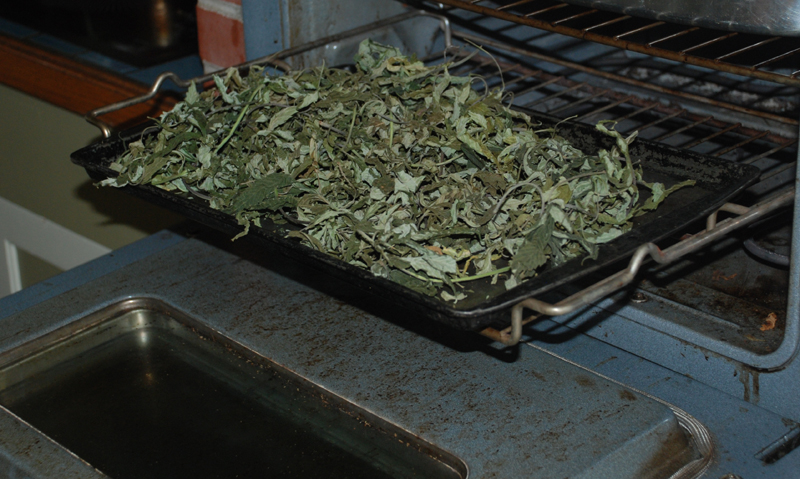
Buds for decarboxylation and most pristine appearance, should be placed on a coffee sheet and baked in a 94C/200F oven until just frangible, when rolled between the finger and thumb. They can then be ground or scrubbed through a pasta strainer to remove the sticks and stems. They should be jarred after grinding, to keep moisture pickup low.
The material shouldn’t be bone dry as it will become too frangible, nor should a coffee grinder be used, because of the fines that it produces, that have to be subsequently removed.
We also dry our trim and leaves until frangible as above and scrub ti through a pasta strainer, using a leather gloved hand and firm pressure, so as to minimize the amount of fine particles generated.
So now that we have covered some of the basics, lets move on to the different processes:
Simple Flow Through Column:
One of the simplest methods of extracting using butane, is a packed column. A column is a long narrow containment that allows a solvent to be passed though it using either gravity or pressure. The column is packed with plant material to be extracted and the essential oils are dissolved by the butane and carried out the filter in the bottom of the column, into a collection device.
Column materials:
Columns may be made from any number of different materials, but not all are suitable for butane service. http://www.coleparmer.com/Chemical-Resistance is an excellent site to check material compatibility with the various solvents. You do however have to read between the lines, and for medical use, stick with those materials listed as excellent.
Using those guidelines, a quick check reveals that Poly Vinyl Chloride (PVC), Acrylonitrile Butadiene Styrene (ABS), Low Density Poly Ethylene (LDPE), for instance, are not suitable, even though listed as good to fair, because the butane leaches out the constitutes, so they will end up in the meds.
They list copper as fair, not because the butane attacks it, but because of sulfur compounds and water that may be present in the butane, which form sulfuric acid and attacks the copper. Dry low sulfur butane doesn’t present the same issues, but copper columns have to be kept meticulously clean of oxides, as for instance, welding copper without adequate respiratory protection, produces a medical condition known as fume fever. If you do not have the time or inclination to keep the extraction column pristine, glass or stainless is a better choice.
Poly Propylene (PP), Poly Vinylidene Fluoride (PVDF), Polytetrafluorethylene (PTFE=Teflon), are listed as excellent, and High Density Poly Ethylene (HDPE), Ultra High Molecular Weight Poly Ethylene (UHMW), or Cross Linked Poly Ethylene (XLPE) may be, but are not listed.
Glass and borosilicate (Pyrex) work well, as does 300 series stainless steel. Neither are dirt cheap, but our local cost for borosilicate columns from the local scientific glass blower is only a buck an inch, plus five bucks to flare one end and close to an orifice on the other end. 1″ Stainless schedule 10 pipe was only $6.20 a foot, last time I checked, but prices vary considerably, so you should check local sources for pricing.
I don’t recommend single pass columns with a larger ID than 1″, as extraction efficiency drops rapidly above that size. Primarily because the material near the injection end is inadequately wetted, and because the larger the column, the easier it is for the butane to just find an easy route through, and continue to follow it.
The absolutely cheapest stainless column that I’ve found is one made from a stainless turkey baster from Bed,Bath, and Beyond for $7.99. Throw away the bulb and pull the press fitted needle out of the threaded adaptor, and you are good to go.
I’ve made a number out of copper, usually with a union near the injection end, so that it could be easily opened and cleaned. I also made a copper one with a can holder at the top, using a contractors size caulking gun, and my first experiments with pressurized butane extraction, were in a copper test sled.
In the latter case, we also added vibration and as we try to use free donated material where at all possible, I draw your attention to the gold plated personal vibrator used for that action and give thanks to the donor, whom wishes to remain anonymous.
A stainless column can be made by screwing a cap on one end and screw radiator clamping a double coffee filter over the other end. Drill a 1/8″ hole in the cap for the butane nozzle, and after thoroughly cleaning the insides by washing out with alcohol and boiling in hot soapy water, it is ready to go.
You can also stick a one hole Neoprene cork in the top of the column, instead of using a cap. It works well enough, though more sensitive to blowouts.
We have our borosilicate columns made and some development was required to stop breaking them in cold wet weather. What was required to stop spalling off conchoidal divots from the injection port in frigid weather, was to make the closed end a smooth even radius of uniform thickness, so that stresses from uneven expansion and contraction were not an issue. You also need to insure that the column is annealed after forming, to relieve all residual stresses.
We add a flare to the ends of our borosilicate columns, to make filter retention easier, so as to reduce blowouts.
A blowout, is where the filter at the end of the column ruptures and blows the column contents into your collection vessel, or the filter blows off entirely, doing the same thing, or when using a cork in the top, it blows out during injection.
You can guard against filter rupture, by backing the coffee filter with stainless mesh, or cloth.
Preventing a blow off gets trickier with glass tubes, in that you can’t just crank down harder on the radiator clamp, without breaking the glass. Alternatives that work better with glass, are twine wraps, zip locks, or rubber bands. We mostly use rubber bands, and stretch them tight.
Column Loading:
When loading the material in the tube, we use a wooden dowel to keep it uniformly and firmly, but not tightly packed. A dowel close to the ID of your column will make even packing easier.
Before loading the tube, we wad up a coffee filter and stuff it in the injection port end, to diffuse the butane as it enters and so that no plant material blow back out into our extraction, should for any reason we need to release butane pressure in the middle of the process.
We cut the top out of a water bottle to use as a funnel, and pack the material as we load it, stopping about every foot to compact. When the column is full of plant material, we double a coffee filter over the end, and then cover that with a cloth patch, securing both with multiple tight wraps of a heavy weight rubber band.
We also scissor trim away all extra filter material, so as to minimize the oil soaked up during the process. I find that if I am careful removing the filter after an extraction, that I can reuse it multiple times, so as to further minimize losses. We also wash out our filters in alcohol, to recover any essential oils soaked into them.
Skunk pharm use of a column is common general practice, though our collection and processing techniques deviate from the norm. We simply support the column full of pulverized plant material over a collection vessel and inject butane through the top port in the column, and let gravity carry it through the column.
As the butane passes through the material in the column, it dissolves the trichomes, and conveys them out the end of the column, into the collection vessel. The butane subsequently evaporates off, it leaves the extracted cannabis oil behind.
When the stream of solvent running out of the bottom runs clear, we cease injecting butane and insert a basket ball pump needle into the injection hole and blow out any remaining liquid. A modified butane can nozzle adapter will adapt the needle to seal the hole.
Examination with a microscope will tell you when the trichomes have been dissolved away, and looks like wet hairs lying down, with the capitate heads missing. Our average yield at this point was around 17 to 18% by weight, but we’ve yielded up to 21.6% by dumping the column, repacking it, and making a second run.
This second run will be less heady, and of lower viscosity, with more sedative properties, so we keep it separate from the first.
Collection vessels:
How we are going to use the oil, to a large degree dictates how we collect it, so lets look at some of the methods we’ve found effective.
Pyrex Pie Plate:
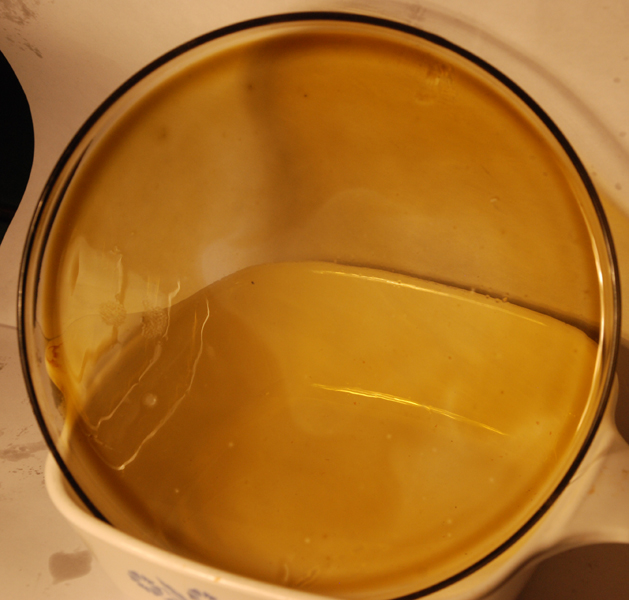
The first that I tried, was collecting in a 10″ Pyrex pie plate, sitting in a larger Pyrex dish full of hot tap water. That works well and the key is the hot water that it sits in, in at least this neck of the Pacific NW rain forest, where we often have high humidity. If we don’t set it in hot water, ice forms at the edge of the evaporation pool, adding considerable water to the mixture.
The hot water also rapidly boils off the butane, until all of it visibly gone, although some remains un-purged and in solution with the oil. Techniques for purging the remaining material vary, so we will cover those steps as a separate issue.
This technique is suitable for any process, with certain precautions and subsequent processing.
Stainless Bain Marie:
Even better in this land of the midnight rain, is a deep stainless bain marie container, sitting in a hot water bath. The deep vessel fills with butane fumes, which floats away the atmosphere, so that no moisture laden atmosphere is anywhere near the evaporation line of the butane. That is how we processed most of our oil, when using single pass columns.
The real advantages to using this type of collection, are that it can be wiped dry on the outside and the pot set directly into a hot oil pot for a rapid purge and decarboxylation, followed by formulation in the same stainless vessel, so that nothing is lost to films left behind in transfer pots. We have the tare marked on each of them, so that we can weigh the material while still in that pot, to establish yield, and the quantities for the rest of the ingredients.
This system works well for decarboxylated and formulated meds, but presents a challenge to remove the oil afterwards, if you are not, and has less surface area for evaporation if you aren’t planning to hot purge or wash it out with alcohol and do thin film vacuum purging. Absolutely the best method we’ve found overall, subject to the above limitations.
Purging:
Butane is relatively easy to purge from cannabis oleoresins or concretes, as it has a boiling point of around -.5C/31.5F, or right about the freezing point of water. Given enough time just sitting around, it will purge below our 5000 ppm smell sensory threshold, and even our far more acute sense of taste, either of which is a small percentage of the 658, 000 ppm, that the MSDS LD-50 tells us it took to asphyxiate 50% of the test rats in 4 hours.
We can speed up that purge, by using a dish with a large surface area, relative to the depth of the pool of oil. Usually small extractions, so as to keep the pool depth thin, are the easiest to purge.
Typically, the thin film is scrapped and stirred periodically, to speed up the process, and a flame may periodically be lightly run over the surface, to warm it and determine if the bubbles exiting are butane and terpenes, or CO2. Some care needed here, as THC, CBD, and CBN are di-terpene alcohols, and are flammable themselves, as are the other terpenes present.
Air movement over the pool speeds up evaporation, by whisking away the saturated boundary layer and providing the extra energy for the molecules of butane to escape the surface of the oil, as it is ricocheting about in the pool. Care must be exercised here, as any dust or lint in the air will end up in the oil, so usually a cheese cloth or similar porous cover is placed over it, before blowing over the top with a fan.
We can also speed it up with the application of heat. Any heat will speed up the evaporation, and one line of thought is to keep the heat low and around 60C/140F, using a hot pad after the hot water bath and scraping and popping any bubbles with a razor blade. A typical purge might take an hour and provides maximum terpene retention.
When adding bottom heat, you can also add a loose fitting lid, which will speed up the purging and keep out lint and dust.
For a faster purge, the temperature can be raised to above the melting point of the cannabis essential oils, or around 82C/180F, to give the butane molecules maximum mobility.
Instead of heat, vacuum may be applied to speed up the purge process. That is the process that we use when we wish to maintain the cannabinoids in their carboxylic acid forms.
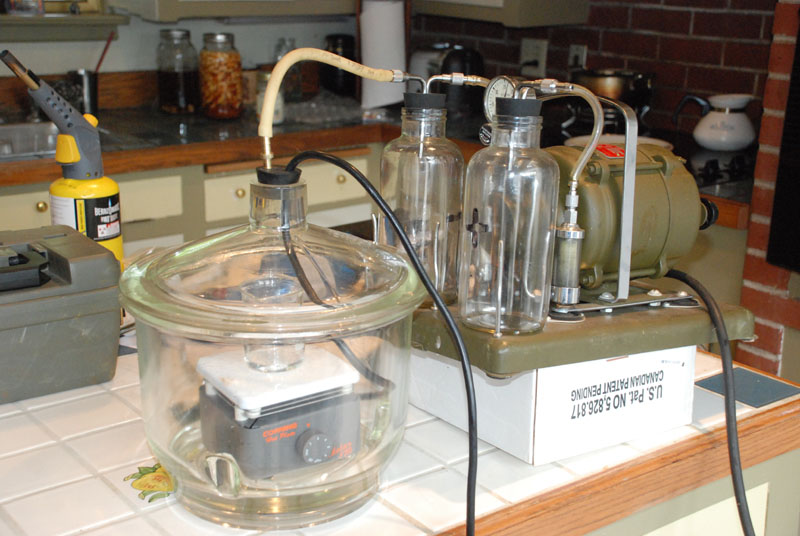
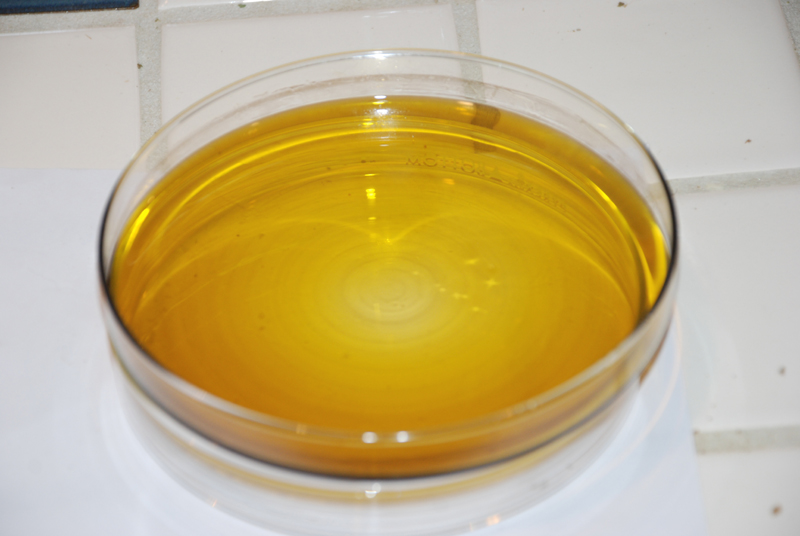
In thin film vacuum purging, we place about an 3/16″ of the oil in a 6″ Pyrex Petri dish, and place that in a vacuum chamber, which also contains a hot plate. That allows us to manipulate both the temperature and atmospheric pressure, so that we can achieve boiling at very low, or even ambient temperatures.
While we use 180F to vacuum purge a raw oleoresin, adding heat isn’t necessary when thin film vacuum purging raw oleoresins redissolved in ethanol. The alcohol will boil away under 28.5″Hg at ambient temperatures, as will the water that is left behind, even without adding any heat.
For our oral and topical meds, we exclusively used the bain marie collection vessel, and simply wiped the water off the outside, following the hot water purge, and set it in an electric fondue pot full of hot 121C/250F Canola oil.
The residual butane will boil off first, exiting in larger, multi sized bubbles, followed by the smaller equally sized CO2 bubbles from decarboxylation.
Depending on the use, we remove it from the hot oil when the bubble activity suddenly slacks dramatically off, indicating the 70% peak of the decarboxylation curve, or when it becomes quiescent, if we are looking for maximum sedative effect.
Hot oil Pots:
We use electric fondue pots for decarboxylation and I prefer the Quisinart, for their sensitive controls and narrow dead band. We also have a couple of Rivals, which work well too, but whose controls aren’t as sensitive.
Some fry cookers may have sensitive enough controls, but most are designed to primarily run at 375F, and lack control sensitivity, as well as have a large dead band at 250F.
It is important to make sure that the container is sitting on something that suspends it up off the bottom of the oil pot, to eliminate direct transfer hotspots. We keep several jar lid rings in the bottom of our electric fondue pots for that purpose.
We never trust any controls however, and use a good mercury lab thermometer, a digital, or an infra red optical pyrometer to establish and control temperatures.
Thermos extraction:
Thermos extraction is a technique allowing an extended soak period at atmospheric pressure. At sea level, n-Butane boils at approximately -0.5C/31.5F, so unless the local ambient temperature happens to be under that temperature, the butane will warm up enough to return to its gaseous state.
In thermos extraction, the prepared material is loaded into a stainless steel thermos bottle and frozen before having pre-chilled butane added. The thermos acts as a Dewar to keep the butane temperature low enough to keep it in its liquid state.
Dropping the temperature will of course also slow down the extraction rate, so the resident soak time must be increased to compensate.
An advantage of keeping the temperatures low, is that it allows you to run fresher material, as the water will be tied up in the form of ice.
Butane has the very slight water solubility of 0.0325 vol/vol, or about 32 milliliters per liter. That means if there is any water available, some of it will come along and bring with it undesirable water solubles, such as chlorophyll.
Tying the water up as ice, allows a longer soak resident time, without picking up those water solubles. Operating at 50F outside temperatures locally, an optical pyrometer showed the butane in the thermos to hover around +8.7F, with mild bubbling action and minimal loss of liquid.
Because of the low operating temperature, you can run either fresh frozen or dried material equally well and can therefore control a wide range of flavors, by simply controlling the pre extraction state of drying, and evaporation of aromatic terpenes.
A fully cured material will produce hashy tasting oil, and fresh material will produce floral oils, and the rest of the flavors will be in between. The flavors besides cannabinoids, are the lighter mono and sesquiterpenes, which are the aromatic alcohols, phenols, ketones, aldehides, and esters.
Equipment required for this process are minimal. I scored a gorgeous little stainless steel thermos at the local Goodwill for $4.99 and my only alteration was to drill three holes in the cap. One to fit a lighter butane can nozzle, and a couple to allow venting during injection. I tossed the inner lid, as the gasket was unsuitable for butane.
After soaking one hour, we pour the butane through a strainer suspended over a bain marie catch vessel, but we also subsequently winterize, so if you aren’t going to, you can rubber band a coffee filter over the opening and dump through that.
A second soak in chilled butane may be used to extract any remaining essential oils. Jump, one of the developers of the process, reports using a 30 minute first soak, and a 2 hour second soak, with pictures showing pristine quality from both extractions.
Once in the catch vessel, the extract can be purged any number of different ways, like any other BHO extraction.
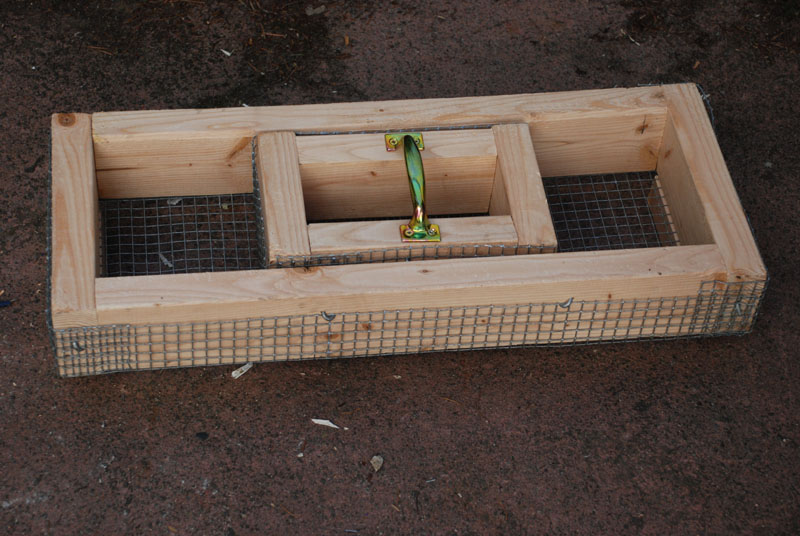
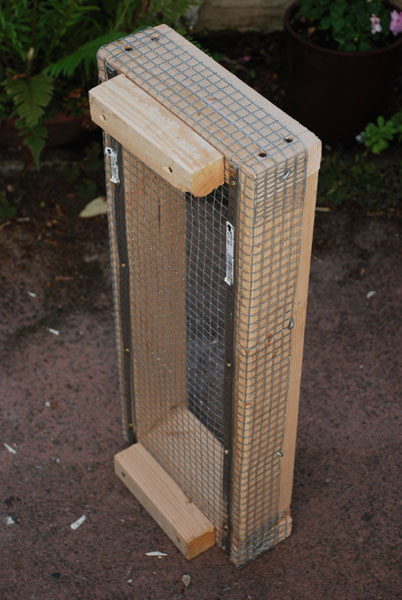
Notice in this case, we broke up the buds and removed the stems in a harvest box, which we subsequently harvested the kif out of for our pipe while standing around.
GW


Posted by scott zcollett on May 14, 2013 at 1:21 PM
I just had my bho product tested in a lab and it came back at 88 percent thc. Whst is the average that you all normally see.
Posted by Skunk Pharm Research,LLC on May 14, 2013 at 1:50 PM
Still dialing our GC to other labs Scott, so I’ll hold off sharing our numbers until I am confident they are correct and defensible. It really depends on the strain, as we also grow high CBD strains, but high 80′s, low 90′s us typically where most high THC Absolutes seem to fall.
Posted by scott zcollett on May 14, 2013 at 2:02 PM
How can i register for your next bho class on 7-7-13.
Posted by Skunk Pharm Research,LLC on May 15, 2013 at 6:08 AM
Fill out the application at the end of the page at http://skunkpharmresearch.com/skunk-pharm-research-classes/ and send them to graywolf@skunkpharmresearch.com.
The 7-7 class is already grossly overbooked, so you might consider the 7-27 class, which is only slightly overbooked.
Posted by Joseph Okoneski on May 9, 2013 at 11:56 AM
Thank you first of all, you have the most in depth site on extraction methods. I have been studying and experimenting with making the safest BHO I can so patients don’t suffer. Where I live far too many people are cutting corners at the cost of other peoples health. So my question to you is I have been using butane to pour through a glass or stainless tube into pyrex just like most, and I want to make something better than your average honey oil. Its been lab tested and it was one of the labs only oil to pass their solvents test. I just don’t have the access or the finances to work with the equipment you are talking about. There is so much information on here my head is spinning. Maybe you can tell me what your opinion is on the different extraction methods for gaining the highest THC and CBD potency, and also best way to reach absolute or an oil that will actually retain the wonderful smells and attributes that led me to pour that strain in the first place. Sadly, the highest grade alcohol I can find around is usually just 91% is what I was taught with for helping with the purging process. Like I said I’ve been reading your site for days and my head is spinning so if you can make any sense of that I would love to improve. Thank you and I hope to hear back. It is nice to see some people taking this to a place where it can help people. BHO has been so controversial that I would love to be better. I would honestly love to come to one of your classes or seminars I read about. I have chronic pain for life from a fractured calcaneus and a shattered foot so everything I have read about opiate withdrawl and pain management is amazing. Thanks again.
Posted by Skunk Pharm Research,LLC on May 12, 2013 at 4:12 PM
We get the highest potency using a non polar solvent, like propane, butane, pentane, or hexane, and winterizing it to remove the non active waxes using a polar solvent like ethanol.
Have you tried ordering 190 proof from http://www.winechateau.com/ ?
Love to see you in class. We currently have more out of state students attending, than Oregon students.
Posted by Joseph Okoneski on May 12, 2013 at 5:20 PM
Thank you. I read much more of your site and did a lot more research and decided that I like the fact that butane extracts the least water soluble biproducts . I made some drastic changes to my process and was left with the most pleased results i think ever. I used to pour over a dish already on heat to speed up the purging process but i was losing all of the terpene quality and decarbing way to fast, for one of the first times even as it still had butane bubbles, it reeked of the strain I used. Im looking forward to your suggestion because i think the winterizing was the last step i was missing. Ill just have to be patient and get the right grade alcohol or ethanol to do it right. Thank you again. I really appreciate the info and Im serious about signing up for your classes so hopefully i will get up to Oregon. Like I said this is something that I plan on using to change my life. Thank you.
Posted by Skunk Pharm Research,LLC on May 13, 2013 at 4:35 AM
Thanks for the good thoughts bro! Look forward to seeing you in class!
Posted by jozikins on May 9, 2013 at 11:23 AM
Hey guys, this is a great read, great attitude!
Question: I was looking into Hexane extraction, but because of the price of Hexane I was looking into alternatives. Calibration Gas is 40% N-Hexane Gas, and background gasses are N-Pentane, Oxygen, and Nitrogen. I know that Hexane and Nitrogen are excellent for extracts, Oxygen I’m not worried about, but what about Pentane? You egg heads have any insight?
Posted by Skunk Pharm Research,LLC on May 10, 2013 at 6:02 AM
Pentane makes an excellent non polar solvent for extraction.
Posted by jozikins on May 16, 2013 at 10:51 PM
Thanks guys! This bit of literature has saved me loads of time and expenses!
Posted by jozikins on May 16, 2013 at 10:53 PM
Awesome, thanks a lot guys! This bit of literature has saved me loads of time and expenses. Good job everyone.
Posted by JackFlash on April 29, 2013 at 12:54 PM
Hi Greyfox. 1st I’d like to express my gratitude for your openness & willingness to share reliable info. You are obviously highly competent & I love the creativeness of all your projects. I have 2 questions & I value your opinion. Hope you can help.
1. I plan to set up 3 – 36″ SS columns & use your BHO extraction method. Freezers capable of -32°C/0°F & large enough to contain a 36″ column are financially impractical for me. What do you think of using a 4 ft long x 8″ dia sched 40 PVC pipe with push-on caps filled with dry ice to freeze the columns? I’d drill a pressure relief hole in one cap. Will I damage the product with the extremely cold (-78.5°C/-109.3°F) temps? If this is a problem perhaps I could put a scrap piece of SS pipe filled with old material with a lab thermometer inserted in the middle into the dry ice & remove extraction columns when they reach ~ -10°F. What do you think?
2. In the interest of saving time & perhaps a little butane, I’ve had both ends of my SS columns threaded. After the 1st run of each column, I plan to reverse input/output ends, put columns back in dry ice to chill & do 2nd run with reverse flow. Do you think this would be an effective approach instead of repacking?
Posted by Skunk Pharm Research,LLC on May 1, 2013 at 8:10 AM
My wife mate Grayfox thanks you for the good thoughts bro!
Dry ice temperatures won’t damage the cannabinoids, but it will dramatically slow down the process.
Are you freezing the columns to run fresh frozen green material or using it on dry material?
Reverse flow is a good compromise, but won’t usually give the same return as a complete repack.
Posted by JackFlash on May 1, 2013 at 9:14 AM
Thanks for the feedback GreyWOLF. Sorry bout that!
I’m running fresh dry material but plan on trying the green next time around. I will use a lab thermometer as I described in the 1st post to keep the temperature between 0° & -10°F. I’ll try both reverse flow & repack & post the difference in results if that’s helpful.
I also found an old SS 2 qt thermos. I put a handful of flint chips in it & put it in a tumbler to clean which worked well. I’m going to try the thermos method as well using dry ice & an infrared pyrometer to control temperature. I’ll post the results & anything else that might prove useful.
Again, thanks for your help & for being an invaluable source of info.
Posted by Skunk Pharm Research,LLC on May 2, 2013 at 5:48 AM
Thanks for the good thoughts and good luck with your experiments! I look forward to seeing the results!
Posted by adam on April 27, 2013 at 1:37 PM
hey got a question greywolf so i come across material that blows gold but once in vac oven goes darker after a few min of purging to honeycomb. I like you host medical patients, i run uhp u butane so on. I am no first timer just bouncing ideas from one co op owner to the next. thanks brother
Posted by Skunk Pharm Research,LLC on April 29, 2013 at 9:44 AM
What temperature are you purging at?
Posted by Josh B on April 26, 2013 at 12:14 PM
I need help , I have spoke with Graywolf on another site in the past(which I no longer have access to) , but my father inlaw was getting his cannabis oil from someone other then me at the time .. he has cancer , already went thru chemo once and now the tumor is back and bigger then ever , the Doctor’s gave him 6months to live , but want to double his amount of chemo in hopes it may help ..
For aggressive cancer treatment how do I convert the BHO into something I can put into a capsule ? Just decarb it ?
What temp and how long should I heat the BHO to properly decarb it so it can be taken orally ?
Where in the PDX area can I buy empty capsules to load ?
What dosage of BHO (far as weight per day) should he be taking ? (Ive read starting with a size of a grain of rice ramping up to one gram per day)
Or is BHO the wrong method here ? Maybe I should be extracting with a different solvent ?
I really love the idea of the HAO , but during the chemo his taste buds freak out to the point he can’t stand the taste of anything , so that’s why I feel an oral capsule is going to be the best bet
Thank you , Josh
Posted by Skunk Pharm Research,LLC on April 29, 2013 at 9:42 AM
We decarb oil at 250F until we reach the stage of decarboxylation we are seeking. See http://skunkpharmresearch.com/decarboxylation/
You can put decarboxylated oil in a capsule, or better yet mix it with about 30% coconut oil to help uptake and tie up the liver. We then mix that with cornstarch to stabilize it into something like silly putty and then stuff that in caps.
Most health food stores have O and OO gel caps. I got my last bag at Natures.
The standard Rick Simpson cancer dose is 1 gram a day, broken up into three or four doses. We start patients with unknown tolerance at 50 mg, to see what happens and then titrate upward to reach the desired dose.
That is half the 100 mg dose we’ve found to be about an average low tolerance dose for pain, with 200 mg about average, and 300 mg a high tolerance dose.
Posted by c on April 29, 2013 at 10:27 PM
If a person didn’t want to get the high ,etc effects but just needed the THC for cancer wouldn’t shatter or preshatter taffy be a good addition to the full plant extract “rso” style? I am curious because it is hard to get enough “rso” into people without them getting too high. Although in my experience they all claim that after a while it doesn’t effect em that much but,,,,,,,,,, Just wondering if you have any experience blending it together. Would the undecarboxilated THC still be usable by the body for the cancer or would it need to be heated before it would become active against the cancer?
Posted by Skunk Pharm Research,LLC on May 1, 2013 at 8:21 AM
I don’t know the answer to that question, but there are folks juicing raw carboxylic acid cannabinoids and reporting good results, so my best guess is that it would do something positive, even if it weren’t the panacea that you are looking for.
One thing that THCA can’t do readily, is pass the blood brain barrier, but that only prevents it from reaching the CB-1 receptors, because our immune systems CB-2 receptors are scattered throughout the body, and so the CBDA present has full access. They are also finding more new cannabinoid receptor types scattered throughout our bodies, and they may also be involved.
Posted by c on May 9, 2013 at 3:50 PM
amazing times. I know of many people doing the raw plant juice and they all have had great results . The “shatter” is just more of that kind of THC accesibility to the body. Course the shatter doesn’t have the fresh other stuff that comes right out of the plant but that would be in the “rso” already to some extent. Interesting stuff for certain!
Posted by Josh B on April 30, 2013 at 1:32 PM
Thank you very much for you reply , I will follow as you suggested with coconut oil and cornstarch ..
Would you suggest using butane or 99% iso for the extraction ?
I don’t know if it’s true or not , but I read that iso will extract cbd’s where as butane will not ,or not as well is maybe what I read ..
If I am leaving my questions in the incorrect area of the site please let me know
Thanks , Josh
Posted by Skunk Pharm Research,LLC on May 1, 2013 at 7:27 AM
Both butane and Iso will extract the CBD, but we use butane and ethanol for our oral meds.
Posted by Josh B on May 6, 2013 at 3:07 PM
What percentage of corn starch is normally used to achieve a thicker state ? something like silly putty as you refereed to ?
Using a stainless steel cup I submerged 42 grams of vac purged bho into 250deg canola oil , took 10-15 minutes for it to stop bubbling after it was heated.. I let it cool down to about 100-110deg’s and added 12grams (30%) coconut oil ,after that I began to add corn starch , got up to 12grams of corn starch and it still wasn’t changing the viscosity any thicker ,I tried adding heat to see if the corn starch would react/thicken the mix and it did not (200-210deg’s for a couple minutes).. I just grabbed a syringe and filled the capsules
I’m thinking I’ll just skip the corn starch in the future batch’s, or try it on a smaller batch next time . is there any advantages or disadvantages – besides changing the consistency – in adding or not adding corn starch ?
Thank you so much for helping us out with this , putting the info out here for us all to use is a true blessing !
Posted by Skunk Pharm Research,LLC on May 9, 2013 at 5:38 AM
35 grams of our silly putty consistency, contains 10 grams oil, 3 grams coconut oil, and 22 grams of cornstarch.
That makes the cornstarch 62.8% of the mixture.
42 grams of BHO would use (4.2 X 3 grams) of coconut oil, or 12.6 grams, and (4.2 X 22 grams) of cornstarch, or 92.4 grams.
Adding the cornstarch just keeps everything more stable for travel, so that the caps are much less likely to leak.
Posted by M C on April 19, 2013 at 2:32 PM
What about freeze dried material?
Posted by Skunk Pharm Research,LLC on April 19, 2013 at 3:33 PM
Never tried it, but ostensibly it would work. The quality of the extraction would be influenced by how frangible the material becomes when that dry.
Posted by matthew on April 15, 2013 at 11:42 AM
Your article and the others on your site have been very informative. i just have a question about a current batch I made. I used dried plant material and ran it through a glass extractor with power 5x butane and two coffee filters at the end. i have been having success with this and have been using heat purging in hot water on an electric range and have been getting nice, rock hard concentrate that can be easily handled. however this time did a bigger run than normal but cant seem to get the oil to the hard stage this time. we have tried vac purging as well as heat and somehow cant seem to get it to what we have done all the other times. what do you think could be the cause of this and how can it be corrected?
Posted by Skunk Pharm Research,LLC on April 15, 2013 at 1:06 PM
Retained solvent or partial decarboxylation.
It takes more heat and time to purge in deeper pools, so more may remain. The added heat decarboxylates the oil and makes it more runny.
You might consider purging in smaller quantities or in a larger container, with more surface area.
Posted by M C on April 16, 2013 at 12:20 PM
Ding ding ding! I had the same kind of thing going, great bho, then bad bho, much hair pulling, thinking, asking, etc and a month of bad batches I came up with three things that are pretty key
-the depth of the pool.
I was killing myself trying to crank through 4-6 columns then purge all at once. I noticed a batch could be under vacuum for 6 hours, be flat w/ no bubbles, but tip the container so the batch runs, and whammy, bubbles. Too thick
-Dry source material. No, really dry. A friend related that he packs his material away with large bags of dessicant he makes from bulk for a week or more before running it. So now after the screen, right before I run my material, I toss it in the oven for a little while (like toss as it warms, not throw in and leave) then pack in a tube.
-Quality of vacuum. I was pulling down to -29 hg but I was also loosing pressure very rapidly if I flip the valve to isolate the tank. What that means to me is that the pump is pulling outside air and whatever through the tank. Not going to be thorough. When I worked out my lid gasket deal better, I noticed the pump quieted down a lot, no rattle, and could run all night without getting really hot.
And do yourself a favor and put a vapor trap between the pump and your pile of profit. Things go wrong, pumps (cheaper ones) will leak oil back to the vac chamber while you wait for depressurization. Make Hulk Angry.
Posted by M C on April 16, 2013 at 1:23 PM
And I still want to come visit, take a class, rub brains and see what happens, but I still have a wildfire for a life, can’t really make it happen yet….
Side note..
Making a new vac tank, I had on hand a 2021 stainless bowl 22 in dia around 12 g, and recalled squirreling away a round plate of glass 1/2″ thick, with holes predrilled for hanging the thing. As the plate is larger than the bowl, I could hang 2 holes off the edge and only have one exposed to vacuum, so I set the valve/vac line to that. 3/8″ neoprene gasket contact cemented to lip of bowl, put them together and see how it works….rrrrrrrrrrrrrrrr
hmm, looks like it is pulling vac pretty fast, looks goo
BOOOM
which is not what the plate glass imploding into the bowl, upwards since it was on bottom, then all crashing to the floor while I stood next to it in shorts.
I like Implosion better than explosion. I can still walk.
Why for it go boom?
the holes in the glass were left rough, not polished out. any roughness to glass is a micro fracture, weakening the entire matrix. And the vacuum says, “Grrrr”.
Sometimes you just want things to work so you ignore what you already know, I guess?
Posted by M C on April 16, 2013 at 1:25 PM
which is not what it sounds like, the boom I mean.. tangential brain!
Posted by Skunk Pharm Research,LLC on April 17, 2013 at 7:40 AM
Yeah, I decided to put a bulkhead fitting into the side wrapper, rather than weaken the already marginal acrylic lid.
Makes a mess, doesn’t it?
Posted by Skunk Pharm Research,LLC on April 17, 2013 at 7:38 AM
Thanks for sharing bro!
Really dry material sidesteps water soluble issues, but makes the materia brittle and frangible. We prefer to run at about 10% water content minimum for oil to be decarboxylated.
For more floral vaporizing flavors, we extract closer to 25% water content, because the lighter terpenes evaporate away with it.
For the most floral flavor, we freeze fresh cut material and extract it frozen.
Posted by frank jones on May 6, 2013 at 7:32 PM
so could you recommend a vapor trap? size and where to make purchase
seems im putting together my own lab(smile)
thank you
frank
Posted by frank jones on May 6, 2013 at 8:10 PM
While we use 180F to vacuum purge a raw oleoresin, adding heat isn’t necessary when thin film vacuum purging raw oleoresins redissolved in ethanol. The alcohol will boil away under 28.5″Hg at ambient temperatures, as will the water that is left behind, even without adding any heat.
hello Greywolf
1st I wanna thank you for sharing such as craft,i live in Colorado and
Im seeing prices soar 2 years ago we were paying 25 bucks a gm for co2
honey oil 15 bucks for full bubble melt,now everything is twice that price
Im not sniveling just trying to convey my thankfull ness
so im a newbie at extraction s I do have a medical garden ,thanks to you folks im now gonna be able to make my own,
if ya don’t mind id like to hear you elaborate on how to operate a dessicator and pump you mentioned that you control the vac for a half hour or so then lock it down and continue under heat
does this mean pump is running during the controlled period to observe
the bigger bubbles then you shut off pump and keep it under vac?
there are so many utube videos but no one seems to include details
also im wanting to try out vaccuming ethanol with out heat
hope this isn’t a pain to ask of ya,it seems im understanding most of
your info . Im also building the diy stainless dessicator and about to order
the filter gear and should be on the road soon
thank you
frank
Posted by Skunk Pharm Research,LLC on May 7, 2013 at 10:59 AM
Once you have pumped the system down and it is stable, you can close the valve between the pump and the desiccator and the pressure inside the chamber will stay relatively stable, rising only in response to the boiling going on inside.
During the periods of slow pressure rise, the pump is over kill, so as soon as you close the valve, you can turn off the pump. Periodically turn on the pump and open the valve to vacuum off any accumulated purged gases, before repeating the isolation and shutdown procedure.
Do remember to turn it on before opening the valve again though, as it can spray oil from the pump into your chamber and product, if you suck air backwards through the pump.
Yes, I just watch the bubbles to tell the difference between solvent and fizzy C02 bubbles. The solvent bubbles are random sized, with some quite large, and the CO2/Terpene fizzy bubbles, are relatively uniform and smaller.
If you cold boil alcohol, you will need a cold trap between the chamber and pump and/or watch your pumps crankcase level like a hawk, and change it every time it reaches max level.
Posted by Skunk Pharm Research,LLC on May 7, 2013 at 10:21 AM
I’m still working on our cold trap bro, but should have the final part this week.
I’ve had only limited success in the lab using dual cold traps and dual condensers running ice water, so how well this works remains to be seen.
What I did, was order a refrigerant recovery pump after cooler to go in front of the vacuum pump, to cool down the alcohol vapors enough to be captured by the cold trap I’ve made out of a sanitary spool and a lid with one vacuum port and one dip tube port.
The incoming stream will be pulled through the after cooler, then the dip tube side of the cold trap, and then out the vapor port, to pass through the pump. I can determine what vacuum pressure it will support, after I see how low it gets the temperature of the stream at current flows.
Obviously the after coolers could be cascaded, and there can be multiple cold traps, or the bath temperature could be lowered by using antifreeze.
More on the assembly, after I try it out.
Posted by Kerr on April 30, 2013 at 6:56 AM
This could also be the product of excessively dried material. The cannabinoids partially break down from theircarboxylic acid state, leaving you with somewhat decarboxylated material to begin with. This will result in gooey bho.
Posted by Skunk Pharm Research,LLC on May 1, 2013 at 8:39 AM
True story.
Posted by frank jones on May 16, 2013 at 10:40 AM
thanks Bro
so as I was a sayin(smile) back to the thin film purge of butane extract
redissolved in eth that it needs no heat,Im stuck on cold trap,so my question is (in photo of diy cold/vapor) what size are the flask being used?
and I do notice a filter there as well so,if ya get a moment sure would
like more info(smile),and thank yas for such kind offerings
frank
Posted by Skunk Pharm Research,LLC on May 18, 2013 at 6:18 AM
I am in the process of building my latest cold trap version, after having experimented with using the original 6″ X 6″ Mk III butane storage tank for a trap, with a refrigerant after cooler in front of it, and both submerged in an ice bath. It works OK, but still doesn’t catch but about 90%, and slows down the process from the added resistance, so larger diameter tubing in the chilling coils are required to reduce resistance, as well as colder water or more chilling surface to capture more solvent.
My newest version is based on a 6″ X 12″ sanitary spool, and instead of having an after cooler in front of as a pre chiller, the cooling coils are inside the cold trap and I am going to circulate ice water or antifreeze through them. I expect it to collect a higher percentage of the alcohol, and be faster than the current test sled.
Posted by lvzy on April 7, 2013 at 10:33 AM
thanks for the great information.
I use a griddle to heat up the inside of my chamber to about 110F.
drop in my parchment paper with the concentrate, and purge till there is no movement.
I was wondering why my concetrate seems to have lost all its taste and flavor.
I have had plenty of runs without vac purging and tasted and smelled great.
Posted by Skunk Pharm Research,LLC on April 8, 2013 at 9:58 AM
Possibly the no movement part. We vacuum purge at 115F in a thin film until there are no solvent bubbles present, but remove it while there are still CO2 bubbles coming off. If you cook it until it is bubble free, it will lose many of its lighter terpenes.
Posted by Carson on March 30, 2013 at 11:00 PM
Where I live, there isn’t any lab testing or high standards for concentrates. Most is sent from out of state and not properly purged. I started making my own after learning a lot off your site about BHO safety and proper procedures. Just wanted to make sure there isn’t more I need to do in order to achieve a clean absolute.
Process: After spraying butane through an unbleached coffee filter into a pyrex cup, I wait until most of the butane naturally evaporates away and then right before I get magma sludge I pour in a 3:1 ratio of 190 proof alcohol to oil. I wait until all the butane bubbles are gone, then freeze mix for at least 24 hours. Pour through another unbleached coffee filter to trap solids then evaporate alcohol in pyrex tray over steaming pot @175 F until sap becomes flat and hardens. Scrape n enjoy?
I’ve been diggin the process so far, but with everything you know about solvents and extractions, I just thought i’d ask to make sure.
Thanks for your help!
Posted by Skunk Pharm Research,LLC on April 2, 2013 at 9:40 AM
The proof of the pudding is in its taste and effect. If it tastes good and works, you have a winner!
A few differences in our processes:
I add the alcohol hot, after all the observable butane is gone.
I use closer to 10:1 alcohol to oil ratio, but don’t measure it, just put in enough so that it is still easily filterable once the temperature is lowered.
I filter before and after winterization, using a coffee filter or Wattman #1 lab filter with vacuum assist.
175F works, but you can preserve more carboxylic acid closer to 140F without vac and 115F with.
If you are using it for oral, I would use 250F, and decarboxylate at the same time.
Posted by Arturo Gomez on April 3, 2013 at 11:14 AM
I need help! I am not decarbing my buds. I did not know about your methods until I stumbled on your website one day and have tried to learn as much as I can from you. Which so far I have been very gracious for and I appreciate the time you took to make it happen. I use Luciene butane. I use a glass extraction vessel. I wanted to know once I blast into my dish, I add hot ethanol? What temperature? I have a glass vacuum desiccator with pump. But I have just been breaking buds and packing them tight into glass vessel. I use a 200 micron mesh filter and use an unbleached coffee filter with clamp. While I allow for the butane to evaporate as much I have in a pyrex dish, I have not used hot water bath from the tap as you suggested, the last time I did my blasting. Not thinking about condensation or anything for that matter…I have to say you have shed some light. However, I am a little confused about the purge process. Why add alcohol? As of now, I just wait till all noticeable bubbles evaporate and then I scrape to place unto parchment paper where it fits into a petri dish top. I place entire glass chamber on a flat skillet, due to its best precision in heat. I purge until all bubbles are gone. But even at low level temps and so forth, I still feel there is residual residue in my oil and I am not content with it. So how does alcohol affect your purging process? I understand that I would purge the oil and alcohol together? I am trying to figure out how to make my oil proud. What do I need to do to make my oil the best? Do I decarb before packing it into my extraction vessel? Do I add hot alcohol to the extracted material just enough to cover the surface area? Do allow for evaporation to occur then or do I just go ahead and proceed as I usually do by purging out the gases after extraction without adding alcohol?
Posted by Skunk Pharm Research,LLC on April 4, 2013 at 7:05 AM
Adding alcohol is an option, but not necessary. We wash out with alcohol, because we are going to winterize the oil to remove the waxes.
We heat the alcohol to boiling before pouring it in, but it cools down immediately. You can use cold alcohol, but it takes more stirring and agitation to get the BHO to dissolve in it.
Purging the alcohol will remove the residual butane, by forming an azeotrope with it, as well as stirring the puddle to aid in the butane molecules escape.
It works best for us to decarb the oil after extraction, because you can tell exactly what is happening, by watching the CO2 bubbles.
We are adding alcohol to the extracted oil at the ratio of about 10:1. It needs to be thin enough to filter, at around 0F.
Posted by funkmecca on April 4, 2013 at 11:10 PM
Ok, so you decarb your oil before you add your hot ethanol and then you winterize? I am trying to understand your steps, are they in sequential order? The 3rd step. You say you decarb the oil. You mean you reheat it after all visible bubbles disappear?
Do you vacuum purge or are you speaking about purging the BHO with ethanol by allowing the bubbles to escape, in step 2? Or are you reheating your oil prior to vacuum purging, then adding ethanol?
Is a thin film vacuum purge different than purging with a chamber a hose a valve and a dual stage pump?
Thank you again for your time! You have shed much light. I just want our oil to taste right.
Posted by Skunk Pharm Research,LLC on April 5, 2013 at 7:17 AM
No, we add the ethanol, winterize, remove the alcohol, and then decarboxylate the oil.
We decarboxylate oil by placing a container of it in a 250F hot Canola oil bath, and watch the bubbles. See our procedure at http://skunkpharmresearch.com/decarboxylation/
We don’t bother to vacuum purge oil that we are decarboxylating for oral use. We use vacuum to keep the heat low so as to preserve carboxylic acid for vaporization.
A thin film purge is vacuum purging the material spread out in a thin film, so that the solvent can more readily escape.
Posted by funkmecca on April 5, 2013 at 1:00 PM
Thank you again for clarification and link! I appreciate your time and lend of knowledge. It is very generous and well informed.
For the oral BHO, you do the steps regarding carboxylation and the hot alcohol.
For vaporization what you guys will do is just the extraction onto surface area of choice and then use the thin film technique to extract the leftover gases or butane trapped inside the BHO? At low heat to preserve the carboxylic acid at about 115 F, while vacuum purging? Sorry, if this is mundane and obvious. Obvious newbie here.
However, I am curious. Can you vaporize the oral BHO?
Also, would like to know if there is anything I should know as far as steps and advice for making BHO for vaporization?
Thank you kind sir. I appreciate all your help in advance.
Posted by Skunk Pharm Research,LLC on April 8, 2013 at 10:17 AM
Yes, we always decarboxylate our oral meds and remove the inert waxes.
Yes you can vaporize oral decarboxylated BHO, but usually don’t with our oral formulas, because of the other things that we add like cinnamon and myrrh.
The other difference between the decarboxylated AA that we produce for oral and topical use, and the Carboxylic acid AA that we produce strictly for vaporization, is that one is in the decarboxylated nonpolar form, while the latter is still in the original polar carboxylic acid shatter form it was in on the plant.
Both work for vaporization, but the THC will typically be slightly higher with the carboxylic acid shatter form, because less of it will have been converted to CBN.
We get bragging rights vaporization shatter by putting about 3/16 to 1/4″ in a shallow dish and heating it to 115F in a -29.9″ Hg vacuum. Control the pressure until all violent boiling stops and then allow to cook under vacuum until the random sized solvent bubbles are gone, but remove as soon as only the fizzy equally sized CO2 and terpene bubbles remain. Remove it from the chamber at that point and let cool.
Posted by CALumi on April 8, 2013 at 5:01 PM
Well, the proof is in the pudding. I followed your steps. Using the thin film technique. One question I have. The initial purge was on extreme low heat. All major bubbles dissipated during this time, like you said. It was 2 hours of vac purging. Finally I took it out and let cool down. I tasted a slight dab. The taste was 10x better than when I did it the last time as a result, it gave me that resin taste in the back of the mouth that I got from the very first dab I ever had. I used an older batch of material, but all flowers. I extracted onto a glass dish that sat in warm tap water. The thin film technique was used and I got shatter. The constancy was hard like candy. I thought it needed more purging so I did an additional purge using slightly higher temperature than the last time (never above 101 F). I got more of a raw honey consistency and the taste is a little modified. Now, it is easier to handle with the glass dabber. It vaporizes rather quickly and the taste seems to be more acidic? Not in a bad way at all.. It seems to taste that initial taste and then it turns into a bite at the end. Is this based on preference at this point? I can do it how I did it the first time, by allowing it to sit on a warm surface no higher than 90 F and I can get shatter. The taste is amazing either way, but do you think I lost something when I did it the second time because the consistency changed and so did the taste. I noticed it had less bubbles in between time and they seemed to appear smaller and denser. I am just wondering if there is one better for you than the other? The raw honey one seems to have a sheen to it in some parts, is this ok? Do I need to do an additional low heat and purge? The parts that are like raw honey, change color when I move it with the glass dabber. Is this a good sign? Which is better? I probably did not need the second purge, but it is much more easier to dab with. However, I think the taste of the shatter seems cleaner and crisper than that of the second purge. Your feedback would be greatly received. Thank you GF for all your help. I appreciate everything!
Posted by Skunk Pharm Research,LLC on April 11, 2013 at 7:37 AM
Sounds like you are trying all the right things!
I get consistent shatter at 115F under -29.9″ Hg vacuum. I purge until the random sizes solvent bubbles cease, and only the equally sized fizzy CO2 bubbles remain. I then pull it and let it cool.
The honey consistency is because of decarboxylation and will have a lower terpene content and be less floral, as well as have slightly lower THC and higher CBN. It is still good and we routinely vaporize both.
Posted by CALumi on April 9, 2013 at 3:05 PM
Dear GW, I attest that you have shed much light to my myopic ways of thought and have helped me think differently. Your forums helped to simplify how I was making BHO by using your thin film technique ..I really did not realize how much heat plays a role in making your BHO taste delicious. I was taught to let all bubbles disappear. Now, I know from proof that this is NOT TRUE. My last batch was amazing in taste, smell and consistency. I messed around with temperatures and found that less is better using the thin film technique. A few questions that I have and I do not know if anyone has ever asked? What should I do with all my BHO reclaim that is not as good as what I am getting now? I have some stuff that is reclaimed via ethanol and some that I basically purged at too high-heat, resulting in the taste to go away, but the potency is there. Should I throw-out the old reclaimed wax? Or can it be recycled maybe for an oral recipe? Green elixir? Something of the sort? Also, what do I do with the left over extracted material? Some of it smells really fresh still. Could I make a QWET extraction from blasted material?
Thank you in advance.
Posted by Skunk Pharm Research,LLC on April 11, 2013 at 8:13 AM
We make an sedative oral or a topical with our reclaimed oil.
I would repack the tube and run the material again if microscopic examination showed that there were still trichome heads left. You could also make a QWET.
Posted by Zephyr on May 14, 2013 at 4:36 PM
When you say Whattmann “#1″ are you referring to Grade 1: 11 µm?
Posted by Skunk Pharm Research,LLC on May 15, 2013 at 6:10 AM
Yes #1 means grade #1.
Posted by fullmeltmike on March 28, 2013 at 7:06 PM
Is there a method for using kief only with the column?
Posted by Skunk Pharm Research,LLC on March 29, 2013 at 9:41 AM
Yeah, we’ve used a 6″ column on a Mk III for extracting kif with good success. We haven’t tried longer columns, over concern for plugging.
Posted by Sppete13 on April 1, 2013 at 7:47 AM
I love Skunk pharms Butane Thermos QW method with kief…. just make sure you put your butane in the already cold thermos BEFORE putting in your kief…. or it can get messy
Posted by Sppete13 on April 1, 2013 at 7:49 AM
(The best medicine I have made to date was pure kief doing a qw with butane… winterized absolute amber…. )
Posted by Skunk Pharm Research,LLC on April 2, 2013 at 9:47 AM
Could you explain?
We usually put the kif in the thermos before freezing it.
Posted by Mookie on March 26, 2013 at 2:05 AM
You guys are hella cool and about the mission. Many blessings.
Posted by M C on March 16, 2013 at 11:45 AM
Also, my resin puddle is maybe an 1/8″ thick, will this still purge in vac tank?
Posted by Skunk Pharm Research,LLC on March 17, 2013 at 7:15 AM
Yes, if you heat it to about 115F.
Posted by Marc on March 25, 2013 at 9:15 PM
I have 2 questions. first one, if my oil comes out dark, like dark brown or even black is there a way to remove that color and make it more clear? yellow? Obviously the better looking product i use doesnt come out that color but i was just wondering. and my second question is how to get HARD SHATTER SNAP at room temp every single time?? Sometimes it glasses up in like no time at all and when i take it out its perfect. other times ive left it in the vac and literally gone to bed, woken uop the next morning to take it out and it was STILL sticky! WHY? help please.
Posted by Skunk Pharm Research,LLC on March 27, 2013 at 5:54 AM
The dark color is usually a function of heat and age of the material. Young fresh material is lighter colored than older dried material, because the carboxylic acid forms are lighter in color than the decarboxylated forms. Consider the trichome that matures from clear to dark amber………….
Sativa oil is typically lighter than Indica’s.
Removing it is not easy and the only reliable way that we’ve found so far, is using ionic resin columns, which is slow and expensive. In most cases, it is easier to not darken the material in the first place.
Shatter is carboxylic acid. Any decarboxylation makes it softer and more maleable. We get it most consistently by using young material and using thin film purging at 115F and -29.9″ Hg.
Posted by M C on March 16, 2013 at 11:32 AM
Hey, back again!
OK, tearing my hair out now. I had gotten a process down to deliver a very nice extract in a flake form. Growers came out of the woodwork to dump trim on me, now I can’t get clean extract, everything tastes contaminated, never seems to stop bubbling after 10 hours under vacuum. After finding another online info resource on Utube, I tried a colder (120 deg f) longer purge. 20 hours at about 120, I have burned oil with butane or something in it. I had been using power 5x, but given a deal on Dodo 7x I switched. I also went from an entire steel canister as vac chamber, to a stainless lid clamped onto a pyrex bowl so I can see inside. I also have a cheapo harbor freight vac pump.
I am out of money, barely keeping power on, sitting on loads of material that is getting older, with folks calling me. And I cannot get my product made to save my life. Which is what I need it to do before I lose my house. No more money to pour into gear.. I am stumped. I am at 29 in merc vac according to guage. ?? help. please.
M C
Seattle
Posted by Skunk Pharm Research,LLC on March 17, 2013 at 4:34 PM
Were you flaking shatter, or were you making wax?
The oil will continue to bubble after the solvent is all gone, from decarboxylation.
We use 115F and -29.9 to produce shatter in thin films in a couple of hours. We watch it closely, and when the random sized bubbles stop and only the small equally sized fizzy bubbles are left, we remove it from the chamber and let it cool in the open air.
If you are making wax, some strains wax up easier than others. 125F at -29.9″ for as many hours as it takes, usually 10 to 20, should get you wax with the strains that we typically work with.
Posted by chives greenthumb on March 26, 2013 at 10:58 PM
make sure the product is not stale or full of fan leaves. Both of these will cause that taste you are mentioning and make set up much harder.
Posted by Skunk Pharm Research,LLC on March 27, 2013 at 6:34 AM
Good point! Fanleaves work well for pain, but they don’t taste very good and give you a charlie horse between the ears instead of euphoric head effect. Ostensibly because of the older more mature trichomes, which are sedative.
Posted by 3 kinds of BHO w/budder on March 9, 2013 at 7:09 AM
[...] Check out Jumps Absolute Amber thread for details or the last procedure detailed on the page at http://skunkpharmresearch.com/bho-extraction/ Reply With [...]
Posted by Newbie BHO Feedback/Tips on March 7, 2013 at 12:44 PM
[...] by mokuro if possible, what is Double solvent method? can you link me some tutorial about it? http://skunkpharmresearch.com/bho-extraction/ this guys the shit! Check out YouTube as well. Type in winterizing BHO. Reply With [...]
Posted by aaron on February 23, 2013 at 10:08 PM
hey ya’ll wondering if someone can answer something for me. i bought my bho steamroller from a guy who said i could reclaim my bho resin using some process of rubbing alcohol, then letting it vapor out over a weeks time, then you can resmoke your lost dabs… has anyone heard of this? and how exactly is it done?
Posted by Skunk Pharm Research,LLC on February 24, 2013 at 7:51 AM
We clean our oil rigs in ethanol, by emersing them in alcohol until the resin is dissolved in it. You can speed it up by heating the alcohol.
We make a sedative evening med out of it, by cooking off most of the alcohol in our still, and boiling the rest off to atmoshpere, with the oil container sitting in a 250F hot Canola oil bath. When it stops bubbling, it is ready.
Posted by aaron on February 24, 2013 at 10:51 PM
Would I get the same results from using 91% isopropyl? Sorry Im sort of new at this whole thing. Initially I was concerned about heating it too, thought maybe it might kill the potency? Also, what kind of container are we talking for the aforementioned ‘oil container’. Is this beyond my ability to do at home on the stove? Thanks for the information
Posted by Skunk Pharm Research,LLC on February 27, 2013 at 8:45 AM
Not sure exactly which oil container of which you speak, but we usually use stainless bain marie wear from the local restaurant supply to hold the oil and set it in hot Canola oil in an electric fondue pot.
Posted by john on February 27, 2013 at 1:15 AM
How much canola oil per / g of absolute ethanol ? You guys are the best
Posted by Skunk Pharm Research,LLC on February 27, 2013 at 8:47 AM
Umm, could you elaborate on the question?
Posted by John on February 28, 2013 at 9:53 AM
Yes, I have about 2 grams of absolute extract that I got from reclaiming my piece with everclear numerous times before winterizing and pouring through a coffee filter onto Pyrex on top of a pot of water on its lowest setting, Let it sit for about 5 hours .. Now what? I usually just hit it on a nail again but I really want to try this canola oil and didn’t know how much to use. Thanks!
Posted by Skunk Pharm Research,LLC on February 28, 2013 at 10:45 AM
If you are mixing it with Canola oil to make an oral, it will mix at any ratio. 100 mg is about the standard dose for a low tolerance person, so if it is mixed 50/50, you would have to take 200 mg to get a 100 mg dose.
For oral, we generally add about 33% coconut oil, but as long as you do the math, you can pick our own ratios.
Posted by john on February 28, 2013 at 11:46 AM
Thanks! Can’t wait to try it! As for my ethanol reclaim process, anything I should tweak or change?
Posted by Skunk Pharm Research,LLC on March 9, 2013 at 3:23 PM
Sorry John, can you elaborate on your question?
Posted by steve on February 23, 2013 at 3:04 PM
First BHO run today and i have a question. When you smoke concentrates, are you supposed to get a film, residue like feeling inside your mouth? or is that butane? smh
Posted by Skunk Pharm Research,LLC on February 24, 2013 at 8:09 AM
That is most likely plant waxes that are present in a raw oleoresin or concrete. We remove those waxes by winterization, if we are going to use the oil for vaporization.
We also remove it for oral meds, because they are basically inert and dilute the potency. We remove it from our topical, because it is left behind on the skin and prills up when rubbin the topical in.
Removing them also removes some of the lighter terpenes, so the flavor loses some of its flora undertones.
Posted by James on February 20, 2013 at 2:32 PM
Was also wondering how many minutes you guys purge absolutes at ambient temperature in the 6″ petri dish (3/16″ of resin). Please let me know if there is a more appropriate forum to discuss this in. Thank you!
Posted by Skunk Pharm Research,LLC on February 23, 2013 at 6:35 AM
As long as it takes. Usually three or four hours.
Posted by James on February 20, 2013 at 2:20 PM
My vacuum chamber reads at almost 28″Hg, more like 27 3/4. Is this enough negative pressure to evaporate ethanol at ambient temperatures? If I applied heat from the bottom, what temperature would you recommend? My chamber is made of thick stainless steel.
Posted by Skunk Pharm Research,LLC on February 23, 2013 at 6:42 AM
That could be either your gauge calibration, leakage, or that may be the relative pressure at your altitude. Did you calibrate your gauges zero, hot tight is the system, and what altitude are you at?
Some gauges faces twist off, and there is a calibration screw in the face near the bottom where the sweep hand pivots. Vacuum grease can help seal mating surfaces, and if 28″ Hg of absolute pressure is all that you have at your altitude, it is the same as -29-9″ Hg.
Posted by Ben on February 17, 2013 at 7:00 PM
Hey GreyWolf, i was wondering your opinion on soxhlet extraction, like the Eden labs Coldfinger?? What solvents what be best, if any??
Posted by Skunk Pharm Research,LLC on February 18, 2013 at 7:32 AM
Soxhleting with a non polar solvent like Pentane or Hexane works OK, but with a polar solvent it picks up excessive Chlorophyll.
Posted by nugget1 on February 17, 2013 at 10:33 AM
i have made a batch of oil and i hot water bathed it then put it on a skillet at which bounced between 125-140 it sat for an hour i poped the bubbles with a pin then at about an hour and half when i went to pop the bubbles it buddered up. I put some on a pin and put a torch to it and it crackled quite a bit is there any way to re purge to get any remaining butane out?
Posted by Skunk Pharm Research,LLC on February 17, 2013 at 10:35 PM
You can continue to purge until you feel it has achieved your desired consistency. You may be dealing with residule water not butane. Butane would just burn. Water will evaporate if left at 140F long enough. I would suggest a quick trip north of 212F to make sure its gone.
Joe
Posted by James on February 12, 2013 at 1:18 PM
Before I go ahead and purchase these tubes, I was wondering if you could forsee any problems using poplypropylene pipe 36″ length and an inch in diameter. I know the chemical comparability is fine, but do you think I would need some kind of gasket between the male threaded pipe and female end cap? Just not sure if the PP threads would be air-tight.
Posted by Skunk Pharm Research,LLC on February 13, 2013 at 9:35 AM
PP works fine and if you Teflon tape the threads, they should be tight enough!
Posted by James on February 11, 2013 at 9:50 AM
Great news! Thank you for the fast reply.
Posted by Skunk Pharm Research,LLC on February 12, 2013 at 10:42 AM
Welcome!
GW
Posted by James on February 10, 2013 at 7:38 PM
Was curious if you guys knew what PSI would be in a flowing packed column 36″ in length and 1″ in diameter. I’m looking into using schedule 8 polypropylene pipe with an end cap on one end and clamped filters on the other. The max rating for these tubes is 250 PSI, hopefully this is safe. Thanks for any and all help. Hope to see you in March!
Posted by Skunk Pharm Research,LLC on February 11, 2013 at 7:25 AM
I’ve never seen above 30 psi and usually far less.
Posted by Dr teeth on February 10, 2013 at 11:46 AM
Hello,
I recently purchased 170 proof ethanol (the best I could get in Ca) and did a small test run. I was not very successful and had a very difficult time purging the water out.
I’m wondering if 99% isopropyl alcohol is acceptable for absolute amber production?
On a side note, acrylic reacts with alcohol by cracking. So be careful with what you make your purge chamber out of. Mine imploded and it sounded like a shotgun. I was very fortunate to not be staring at it at the moment.
Posted by Skunk Pharm Research,LLC on February 11, 2013 at 7:36 AM
99% Iso will work for AA production.
You might also try having 190 proof shipped to you from http://www.winechateau.com/
Posted by Zypher on May 6, 2013 at 2:45 AM
Would you please email me and elaborate? I am having difficultly finding ethanol.
Posted by Skunk Pharm Research,LLC on May 7, 2013 at 9:24 AM
Email sent.
Posted by Goude Witty Comment on February 7, 2013 at 12:01 AM
Excuse the post if in the wrong area, but what are your thoughts on this product in use for cannabis alchemy? Is it safe for use? Ultra-Ever Dry is a superhydrophobic (water) and oleophobic (hydrocarbons) coating that will completely repel almost any liquid. Ultra-Ever Dry uses proprietary nanotechnology to coat an object and create a barrier of air on its surface. This barrier repels water, oil and other liquids unlike any coating seen before. The other breakthrough associated with Ultra-Ever Dry is the superior coating adherence and abrasion resistance allowing it to be used in all kinds of applications where durability is required.” video here….
http://youtu.be/IPM8OR6W6WE Thank you for all the information, have a great day!!!
Posted by Skunk Pharm Research,LLC on February 9, 2013 at 8:15 PM
Good question! The MSDS doesn’t provide enough information to tell, but it sure looks interesting, doesn’t it? http://www.ultraeverdrystore.com/how-to-use/base-coat-safety.pdf
Lots of nasty stuff that you wouldn’t want in an extract, but what is unclear is what might be remaining and what some of the proprietary ingredients are.
Posted by M C "Mr. Science" on February 6, 2013 at 3:33 PM
Hello good people of the S-P,
I never made it down to visit in person, as my life is, .. , vigorously evolving. But rest assured, I have been very busy in the Z-L (zombieland) refining my extraction technique, apparently to a look that is unseen around here. One of the vendors I process for has asked me to just make the sticky shatter because people know what it is and he can’t / is tired of explaining what this stuff is.
I started calling it “Absolute Sugar” tm.
So, after having the rest of the internet give me enough info to get people sick and maybe blow myself up, I joyously found this (and many more) thread and had the process come together.
The material:
I have used everything from big honking yellow leaves mixed with sticks and crumbles to tiny flavor samples of AAA flowers. I think the most important aspect of the material is uniformity. It can be really dry or a little moist ( and I mean little) and it can be material from any where but the stem I suppose, but it should be uniform in size and moisture content. If uniformity is not achieved, partial extractions as well as leaching undesirable elements out faster than normal occur. I work with glass as well, so I have the benefit of having a kiln that is usually somewhere between 400-1000 deg sitting around that I can lay material out near to dry it if need be. I then put on a leather glove and push/grind all the material through a #10 screen. The material is ready for packing the
Glass Column:
I am using medium wall tubes with an ID of 1″ various lengths, the average holds about 40 grams. The glass has a dome and orifice on one end and the tube is flared on the other, assisting in keeping screens on.
Collection vessel:
I run the butane through and into a shallow wide pyrex bowl. This sits in oil (cooking) in a binks pressure pot (used for painting) with rubber gasket, ports, etc, but no view window. I am using carbon steel now, but as the product never comes in contact with it, and has a lid on during purge (overhead drips from lid). This sits on a hot plate in front of a large explosion proof fan in my shop. The fan is run by a pulley to a remote motor isolated from the work environs.
Process:
Heat the collection tank to about 200 and start running either 5x or 7x butane through the column. After a while of watching the flow of butane, having run many many columns, I started to release pressure from the can valve, but keep the orifice covered, stalling the butane for a little soak. I usually run 2 cans through (300 ml ea) and had been running them back to back. I noticed after an experiment however that more extract can be gained by being able to “wet” the material more times. The brunt of the solvent kick is when it initially wets the material, it seems to me. So I took a column, and took note of the color of the eluate. Then I took the same size column packed with the same material, ran one can, used compressed air to blow it out thoroughly, then ran another. The initial eluate was almost as amber as the eluate from the beginning of the first can. It ran to clear much faster than the first can of course, but it seemed obvious that a gain was made.
Next I thought about very pollen heavy material and the possibility of “mud” blockage, or getting a puck formed in the tube that the solvent then takes path of least resistance and does not work on. What about back flushing? The next trial was releasing the bottle slightly from the orifice to allow some butane to escape, enough so I see material move up the column a little, then press the bottle back to correct flow. Hard to gauge if this is really helpful without a bit more precise testing and measuring.
OK, pot of very cold amber bubbly butane purging off until it is a thick fluid with more occasional bubbles, raise heat to 160 deg f. and vacuum down to -29 for a while. I have to open and check temp a few times to check the temp and make sure I don’t burn it due to the lack of precision in my equipment. Once it is flat, it is fully purged. Different strains seem to take different times.
Now I put the product back into solution in either ethanol or methanol, freeze for many hours depending on schedule, then strain through coffee filter. Marvel at the odd mud left, of course I have gloves so I can gently squeeze out the filter to get the most product.
Then it gets laid out on glass sheets, I tip them back and forth to thin the material and let it cure in a warm area for 7 hours or so. Then I quickly cool it, usually by just setting outside in Seattle. When it is cold, I feel check the product, especially the thick spots to make sure it is hardened, not sticky or mushy. Then I razor it up/flake it off the glass. I use parchment over the scraper due to the stuff popping 2-3 feet away sometimes when scraped. What I have is a pile of amber crystal flake stuff that generally does not melt back into an amber shard if kept cool. Not freezer cold, like in a cabinet so warm temp spikes in the room don’t bother it.
Some people like this as the final, some want shatter. I weigh it up into grams then flash it on parchment in front of the kiln. The stone is usually over 190 deg, but the pile of sugar is not there long enough to get over 125 deg. Just watch it, when flat, cool, break into chunks for packing. Very transparent. One vendor made a joke about do I have one with a thousand year old fly in it.
I have pictures of all this stuff if you want to see. I have put off writing this as I knew it would take a while.
Just today I had a client say the last stuff popped on the nail when he went to vaporize it. This generally means butane. It was a small batch, so not a bunch of people got some, but no one else has complained, and I certainly have not had any pop when I vaporized it.
The only difference in the batch was I went to plastic containers at the urging of a vendor instead of parchment envelopes. I measured out the grams into the cups, put them on the warm stone, watched the sugar melt down in a few seconds and removed to cool.
I did have one cup left over short a gram, with sugar not melted. I vaporized, no pop. I put the cup in front of the kiln, and when it melted down, bubbles started to appear. I removed it, cooled a little but not to full harden, vaporized, no pop. I did not inhale to taste, nor did the client.
How can there be butane after the methanol wash and cure??
All other batches before this pineapple express have been fine with repeat clients.
Posted by Skunk Pharm Research,LLC on February 7, 2013 at 10:23 AM
Thanks for sharing bro! Looking at your process, my guess is that the pop was water. Water will turn a smooth burning oil into a sputtering popping spitting oil, and there is virtually no chance there was enough butane to pop after your process.
Posted by lindsay on April 6, 2013 at 6:38 PM
What can you do to get the water out? Just leave the concentrate out and let it evaporate?
Posted by Skunk Pharm Research,LLC on April 7, 2013 at 7:17 AM
How much water do you have, and what product do you wish to end up with?
Posted by Budhappy on February 4, 2013 at 12:21 PM
One other thing, the thermos soak was for about 1 hrs each time, and got maybe 20 hits each time. Even for the fresh ph that was done today.
Posted by Budhappy on February 4, 2013 at 12:19 PM
Hi all.
Just wanted to say that I ordered a vacumn chamber and had my first vacumn purged bho oil. I don’t think that I would ever smoke any other kind. I picked some buds from my purple haze, super lemon haze, and cheese, and a homemade hybrid of of slh x “oracle”. These are still a few weeks away. Haven’t started flush yet. First picked fresh buds, then stuffed them in large honey bee extractor.
-30C here, so placed outside for 12 hrs. Blasted 2 cans of near zero impurities butane. Not much oil at all. 15-20 good tokes maybe.. Ended up being the color of hard honey. Not really yellow, more clear. Dabbed it with a buddy, (going to buy one of those too, a dabber tastes awesome), and wow. This doesn’t taste like oil. It’s like walking into a flower shop, and smelling with your taste buds.I could feel the residue all over my teeth, gums, cheeks for about 15-20 mins later. Very uplifting and gave me goosebumps after about 25-30 secs of inhaling. I rewashed the weed in the thermos method, and it came out really yellow. No heat was needed for the purge, room temp and oil was still pliable. The rewash tasted about the same, but not quite as potent. The comedown made me a little tired. Just thermosed some purple haze today and came out dark yellow as well. I have been a smoker since ’84, and never tasted oil this good. Just my 420 cents worth.
Happy medicating!
Posted by Skunk Pharm Research,LLC on February 7, 2013 at 11:57 AM
Thanks for sharing!
Posted by The Dissent Grow - Page 758 on February 3, 2013 at 7:07 AM
[...] not so little write up , covers a lot of shit. more than I even read. now let's make some more oil! http://skunkpharmresearch.com/bho-extraction/ Colorado Amendment 20 compliant! I gave up playing guitar to grow weed, I gave up tv to [...]
Posted by star crash on February 1, 2013 at 8:47 PM
So , instead of a thermos , I tried a one quart mason jar as a collection vessel . Experimented with 20 g’s of popcorn bud and soaked them for one hour (outside temps are below freezing so this was easy) that filtered that liquid into a tray , let the solvent (butane) evaporate , re-dissolved in 191 proof ever clear & let evaporate again
Yield was .75 g’s of very clear amber.
2′ND wash the buds were powdered and soaked in the mason jar for 2 hours & again follow the above steps
Yield was 1.25 g’s of a darker , yet still translucent “amber grade” extract
so , around a 10% total return in an extremely easy fashion . Total butane used was 1200 milliliters
how I’d do?
Posted by Skunk Pharm Research,LLC on February 4, 2013 at 7:33 AM
Good job, your 10% yield is in the ballpark for popcorn, so it sounds like you probably got it all and very clear amber, plus your darker amber grade sounds like the right colors.
The real test is in the taste and effects! After trying it, how do you think it turned out?
Posted by star crash on February 4, 2013 at 9:55 AM
Taste is exquiste It’s incredible!! I vaporize with a dome globe & titanium nail set up. One small dose & I’m thoroughly medicated in a way that smoking cannabis flowers just can not achieve. These extracts are a true “shatter amber” and I can’t really call it an “oil” per say . I’m very proud . I’ve been smoking cannabis since 1973 & at almost 52 years of age I’ve really discovered something special , thanks in part to folks such as yourself. I will try to get some pics up at icmag…
much peace from Star Crash!
Posted by Skunk Pharm Research,LLC on February 7, 2013 at 11:58 AM
Looking forwar to the pictures!
GW
Posted by How often do you dab? - Page 2 - Grasscity.com Forums on January 30, 2013 at 8:30 PM
[...] [...]
Posted by Toke Signals with Steve Elliott | Absolute Medication: To Hash Oil And Beyond! | Toke Signals with Steve Elliott on January 29, 2013 at 10:31 AM
[...] [Skunk Pharm Research LLC] [...]
Posted by Laron on January 26, 2013 at 9:50 AM
I found desecration jars at amazon I also have a vid on making a great chamber out of a co2 alum pressure vessel the des jar is good to 29 inches of mercury complete and total evacuation at EXTREAMLY low temps
Posted by Skunk Pharm Research,LLC on January 29, 2013 at 6:20 AM
Love to see your video link!
GW
Posted by Thai Sam on January 23, 2013 at 5:44 PM
Candy topical cream cough drops chapstick and questionable to some animal treat slash meds
Posted by Thai Sam on January 23, 2013 at 5:37 PM
decarboxylated oil plus your favorite honey plus 2 teaspoons of coconut oil plus proper catalyst and mixing procedure makes absolute 100 percent measurable amount gof THC given proper storage measures. that can go into any recipe, homemade soda, favorite drink
Posted by Thai Sam on January 23, 2013 at 5:17 PM
Allows larger quantities of oil to come out cleaner with less effort for medical use via vaporization and seems to leave the high in cannabinoid leaf material or cellulose to be extracted for topical use. I would like to know if I’m losing out on precious Micro chemicals in my head stash by using this mmethod
Posted by Skunk Pharm Research,LLC on January 31, 2013 at 3:48 PM
Maybe less flavor, but the important terpenes and cananbinoids should be there.
GW
Posted by Thai Sam on January 23, 2013 at 5:10 PM
silk screen from bubble bags work very well for screens and a add a question for anyone.
does oil made from only kief only have a different chemical composition then usin g kief and plant material or celluose together at the same time. I find that in all kief g extraction allows larger quantities of oil additional in vaporizer a shin use to be extracted
Posted by Skunk Pharm Research,LLC on January 31, 2013 at 3:47 PM
We’ve extracted premium oil from kif, and it is different that oil from plant material.
Posted by Sppete13 on February 7, 2013 at 8:38 AM
What is the best way to do this?
Posted by Skunk Pharm Research,LLC on February 7, 2013 at 11:18 AM
If you are asking what the best method to extract BHO, I like using a closed circuit Terpenator best, but a column or thermos both work well, albeit at a higher operating cost.
Posted by jesse on January 20, 2013 at 6:14 AM
According to the cole-parmer compatibility chart butane causes a severe reaction to silicone, so what are you suppose to vac purge on after you scrape it off Pyrex? I saw you say it was ok to blast onto parchment, although certain company started producing ptfe paper specifically for that purpose. Thoughts? Another question I have is I scored a vac oven on ebay for 100 bucks but it doesn’t a window in the door so I have to open it to check on the oil, is that problematic? Can I replace the door with lexan or will the butane cloud and crack it? Also you guys rock and I wish I could come to or to take a class but I live in ri
Posted by Skunk Pharm Research,LLC on January 21, 2013 at 8:56 AM
The word Silicone covers a range of manmade polymers, based on a silica backbone, with carbon, hydrogen, oxygen, and other atoms bonded at the atomic level. It is used in oil and grease, silicone rubber, silicone resins, silicone caulking, adhesives, etc.
We may be talking semantics and word usage with the Cole-Palmer compatibility charts, as they are soaking mostly gasket materials in different solutions, to observe weight gain, loss, and change of physical appearance.
The polymers don’t all react the same to n-butane, and another issue Cole Palmer would have against using a silicone gasket material, is its gas permeability. It is about 400 times more permeable than butyl rubber, so while it is super for medical applications requiring aeration, it stinks for a gas tight seal.
A silicone resin spray, doesn’t care about gas permeability, and the n-Butane molecule has full valence orbit, it is not likely to react with the highly inert Silicone resin. Neither appears to be reactive enough to start or support a reaction at the temperatures involved.
I would be more concerned about PTFE finding its way into my heated oil, because even though it has a combustion temperature that starts decomposing it as low as 200C/392F (163C/325F?), if you read the fine print of the following two links, you will note the following issues, amongst them HF acid as a pyrolysis byproduct:
http://msds.dupont.com/msds/pdfs/EN/PEN_09004a2f806ab36e.pdf
http://en.wikipedia.org/wiki/Polytetrafluoroethylene
Acute inhalation toxicity: The thermal decomposition vapours of fluorinated polymers may cause polymer fume fever with flu-like symptoms in humans, especially when smoking contaminated tobacco.
The pyrolysis of PTFE is detectable at 200 °C (392 °F), and it evolves several fluorocarbon gases[21] and a sublimate. An animal study conducted in 1955 concluded that it is unlikely that these products would be generated in amounts significant to health at temperatures below 250 °C (482 °F).[22] More recently, however, a study documented birds having been killed by these decomposition products at202 °C (396 °F), with unconfirmed reports of bird deaths as a result of non-stick cookware heated to as little as 163 °C (325 °F).[21][23]
While PTFE is stable and nontoxic, it begins to deteriorate after the temperature of cookware reaches about 533 K (260 °C; 500 °F), and decomposes above 623 K (350 °C; 662 °F).[24] These degradation by-products can be lethal to birds, and can cause flu-like symptoms in humans.[24] In May, 2003, the environmental research and advocacy organization Environmental Working Group filed a 14-page brief with the U.S. Consumer Product Safety Commission petitioning for a rule requiring that cookware and heated appliances bearing non-stick coatings carry a label warning of hazards to people and to birds.[25]
Meat is usually fried between 400 and 450 °F (204 and 232 °C), and most oils will start to smoke before a temperature of 500 °F (260 °C)is reached, but there are at least two cooking oils (refined safflower oil and avocado oil) that have a higher smoke point than 500 °F(260 °C). Empty cookware can also exceed this temperature upon heating.
[edit]PFOA
Perfluorooctanoic acid (PFOA or C8) has been linked to cancer, thyroid disease, ulcerative colitis, and high cholesterol.[26] In the form of an ammonium salt,[27] it is used as a surfactant in the emulsion polymerization of PTFE,[28] [29] and has been detected in some PTFE products. [30][31] The levels that have been measured in nonstick cookware range from not detectable to 75 parts per billion.[31] [32] These are lower than in PTFE products such as thread sealant tape (with 1800 parts per billion (1.8 parts per million) of PFOA detected) because nonstick cookware is heated to volatilize PFOA.[30]
A DuPont study on Teflon PTFE did not detect any PFOA above their detection limit of 9 parts per billion,[33] and DuPont says no PFOA is in Teflon brand cookware.[34] A 2009 USEPA study found levels of PFOA in nonstick cookware ranging from undetected (with a detection limit of 1.5 parts per billion) to 4.3 parts per billion.[31] DuPont says there should be no measurable amount on a finished pan provided it has been properly cured.[35] While PFOA has been detected in the low parts per billion range in the blood of people,[36]exposure from nonstick cookware is considered insignificant[37][38] —despite the marketing of other wares. However, at temperatures well above those encountered in cooking,[39] PTFE pyrolysis can form minor amounts of PFOA.[40][41]
In January 2006, DuPont, the only company that manufactures PFOA in the US, agreed to eliminate releases of the chemical from its manufacturing plants by 2015,[42] but did not commit to completely phasing out its use of the chemical. In the emulsion polymerization of PTFE, 3M subsidiary Dyneon has developed a replacement emulsifier[43] despite DuPont stating that PFOA is an “essential processing aid”.[44] As of August 2008, the EPA’s position was that it “has no information that routine use of household or other products using fluoropolymers, such as nonstick cookware or all weather clothing, poses a concern.”[45]
GW
Posted by jesse on January 21, 2013 at 9:24 AM
Thank you. So do you think it is worth it for me to make a transparent door for my vacuum oven?
Posted by Skunk Pharm Research,LLC on January 21, 2013 at 9:38 AM
Yes, but probably not out of Lexan. In the right thickness it would be strong enough, but wouldn’t like any upper 292F decarboxylation temperatures and might suffer high cyclic fatigue.
Lighting the oven and installing a tempered glass sight glass, or small glass window just big enough to tell what was going on might work better. For design purposes, glass has about the same rigidity as alumnimum. Both have “I” values of 10 X 10-6, while steel is 30 X 10-6.
Posted by Dr teeth on January 21, 2013 at 10:57 AM
I justed used 3/8″ acrylic for my homemade vacuum chamber. I cycle it often and for long periods and it has no problems. My 14″x14″ piece cost me around $25. It rests on top of a 20 quart aluminum pot that was $38 shipped to my door. With my vac gauge, brass fitting and vacuum hose my entire 5 gallon (12″ id) vac chamber was under $100. I suggest people just go look at some diys instead of giving the DIY guys on eBay around $120 profit.
Posted by Skunk Pharm Research,LLC on January 22, 2013 at 5:34 AM
Good show building your own! How hot have you operated it?
Posted by jesse on January 22, 2013 at 5:39 AM
Yeah making my own was next if the vac oven was broke, I feel safer running an oven for ten hours, saw too many crushed stock pots on tc lol
Posted by Skunk Pharm Research,LLC on January 24, 2013 at 6:26 AM
Yeah, it definitely requires a heavy wall pot, as atmospheric pressure is almost 15 pounds per square inch.
Posted by fobextractions on January 18, 2013 at 10:11 PM
Where did you source your information that our sensory threshold for n-butane is 6.61ppm? thank you. A link would be greatly appreciated!
Posted by Skunk Pharm Research,LLC on January 19, 2013 at 10:20 AM
Hi FE! Sorry, after four hours of searching, I haven’t located my original source, so I’ve changed that reference in the posting. Thanks for pointing it out to
As I recall, it came up in a search on the suitability of n-butane as a food propellant, but too much time since I researched it too few brain cells left. If I run across it again, I will record the source and give you a heads up.
GW
Posted by Mark on January 23, 2013 at 9:17 AM
Hello Skunk Pharm Researchers. Thank you for all of your dedicated work here. In reference to a question posted by fobextractions, Jan 18, 2013, I have found a different value and source for the sensory threshold of n-butane. The TEXAS COMMISSION ON ENVIRONMENTAL QUALITY published “FACT SHEET Butane, All Isomers” July, 2012. The bottom pf page 1 states, “An odor detection threshold of 1,200 ppm was reported for n-butane.”
Hope this helps!
Posted by Skunk Pharm Research,LLC on January 24, 2013 at 6:54 AM
Thanks Mark, it does trump my Praxaire MSDS source for odor detection! Still trying to find my data source on taste!
GW
Posted by Dr. Teeth on January 9, 2013 at 2:51 PM
Sorry, I have a lot of questions. I’m a strong believer in “The waiting man gets the wind behind him. So stop rushing into things and plan properly in order to be successful”.
1) What length for single pass extraction do you recommend? Also with a 1″ diameter, how much dry material can you fit into… say a 2′ long extraction vessel?
2) I am wondering what vacuum pump and purge container you are using and if you can link where I could purchase one or one similar online? I noticed that your purge container has a rubber stopper that can allow the power cord for your hotplate to work. Would you still recommend using a hotplate or could you simply submerge the purge container into temperature controlled hot water?
3) I had a friend point out to me that a metal extraction vessel has a possibility of creating a spark and starting a fire; so he recommended using plastic. Do you find these claims to be valid or not really worth worrying about? I can order PP online or get SS locally, they cost about the same.
4) As for the filter at the end of the extraction vessel, is a certain micron recommended or does any fine mesh work?
I’m sure I have more questions but cannot think of anymore at the moment.
Thank you
Posted by Skunk Pharm Research,LLC on January 10, 2013 at 9:01 AM
When using columns, I ended up with three glass ones. A 12″, a 24″, and a 36″. By a factor of 10X, my most used one was the 36″ and the least used the 24″. I either had a short run, or was in a hurry with a long one.
How much weight you get in a column, depends on what it is and how hard you pack it. For instance, a 1 X 1 1/2″ X 24″ column on a Mk IIIA has 35.6 cubic inch internal capacity, and holds from 135 to 203 grams of material, depending on whether it is prime bud or trim, how wet it is, and who is packing it.
The way we prepare our bud, I pack about 150 grams in that column, so that is about 4.2 grams per cubic inch. A 1″ X 24″ column would therefore hold about 80 grams.
Our pumps range from a surplus MASH pump, a CPS VP6D AC vacuum pump, and a Robinair 15500. We got them all off e-Bay.
I picked up a glass vacuum desiccator from American Scientific, but you might look at what they use in the epoxy casing industry to degas castings.
IE: http://www.ebay.com/itm/3-Gallon-Vacuum-Chamber-With-3-CFM-Vacuum-Pump-New-/130690001230?pt=BI_Pumps&hash=item1e6dbb294e#ht_1811wt_932
http://www.ebay.com/itm/3-Gallon-Vacuum-Chamber-for-Silicone-and-Resin-Casting-/130690140675?pt=BI_Pumps&hash=item1e6dbd4a03#ht_1503wt_932
You can simply submerge a suitable container in hot water and in fact, we also do that using a Lil Terp tank.
Your friends concerns are ill founded and the Terpenator won’t work in plastic, because of the heat transfer rates. The butane is in a closed cycle, where there is no oxygen to burn, nor any way for a spark to get to it, unless you have a leak.
Because it always possible to have a leak, we use these puppies only in well ventilated areas, and away from ignition sources.
As the joke goes, “Please lean back and relax for your trip, as all human error has been removed from the controls of this vessel and absolutely nothing can go wrong, go wrong, go wrong, go wrong………………………………..
We use a 20 mesh screen at both ends of the column, and pack two wadded up coffee filters in both ends of the plant material, which the screens hold in place.
We also filter it with a coffee filter, when we wash it out of the container with ethanol, and again after we winterize the ethanol to remove waxes. We use either a coffee filter, or a #1 Wattman (17mic) filter, with a vacuum assist.
If we are serious, we then filter with a 0.2 micron syringe filter, to get out mold and bacteria.
Posted by Les Reasonover on January 7, 2013 at 3:46 PM
What is the benefit, if any, of ingesting oil with THCA (low heat purged Concrete) as opposed to oil that has undergone decarboxylation with THCA converted to THC? I have found ingesting oil that has not undergone decarboxylation, that contains high THCA and low THC provides good pain relief with less intoxication.effects. Is this the reason for making such a oil? If not, what are the reasons? Are there some conditions the high THCA and low THC extract is more effective for?
Great info! Thanks!
Posted by Skunk Pharm Research,LLC on January 9, 2013 at 9:48 AM
I am asking those same questions, as it would appear that undecarboxylated cannabis oils still cure things. Is decarboxylation only necessary to make the THC pass the blood brain barrier more readily, so that it is orally active?
So far the best answer that I have is that THCA may act on other receptor sites than the CB-1, to create its effects.
Posted by Les on January 9, 2013 at 1:44 PM
…or reacts to the CB-1 receptors in a different way… or decarboxylates in the body releasing over time? I seem to get some psychoactive effects from undecarboxylate oil/bud. Is this THCA or CDB or some combination thereof or is it a small amount THCA that has been decarboxylated? Either way, I’m thinking it is essentially the same as ingesting fresh bud (a very nice and popular way to medicate, for pain at least) without the hassle of a constant supply of ripe fresh harvested material. Thanks for your input!
Posted by Skunk Pharm Research,LLC on January 10, 2013 at 7:41 AM
The CB-1 receptors are in the brain, so the blood brain barrier issue would be a problem for polar carboxylic acid.
CBD, reacting mostly with the CB-2 receptors scattered throughout our bodies, doesn’t produce psychoactive results, as it is an analgesic. The CB-2 receptors do however control much of our immune system, so I’m guessing it is the CBD that is responsible for much of the effects and it doesn’t have to be decarboxylated to reach the CB-2 receptors.
Posted by Dayzt on January 10, 2013 at 9:00 AM
Great conversation regarding CBD! I just wanted to add… decarbed or not, infusing it with something (ie: cococnut oil) will help keep it ‘tied up’ in your system longer, thereby giving a better chance to be effective before it passes through the body. Just my 2c =)
Posted by Skunk Pharm Research,LLC on January 11, 2013 at 6:24 AM
Very good point! One of the purposes of coconut oil in our orals, are to tie up the liver processing it, so as to increase cannabinoid residence time.
Posted by Les on January 11, 2013 at 7:47 AM
Yes Dayzt, I have been using olive and grape seed oils for ingestion but after reading here I see there is evidently an advantage to using coconut oil. I rub a couple of drops of ~1:1 BHO and carrier oil on my gums. Works fast and great! Thanks again for the excellent info SPR. Very helpful!
Posted by Skunk Pharm Research,LLC on January 12, 2013 at 4:33 AM
Ohmmmmmmmmmmmmmmmmmmmmmmmmmmmmmmmmmmmmmm!!!!!!!!!!!!!1
Posted by CannaBliss Liberty on February 23, 2013 at 4:58 PM
Just wanted to point out that CB1 receptors are also expressed in liver, fat, muscles (there’s more) cells, digestive tract and in the lungs and kidney’s, to name a few. There is also large concentrations in the spine.
Also Dr. Courtney has said that there is some evidence that show the so called “CB3″ receptor (which does not respond to any active Cannabinoid) responds to Cannabinoid Acids.
Posted by hitboro on January 7, 2013 at 11:46 AM
Hi! Could you please help me come up with a way to filter the sulphur out of my shatter? It’s the best looking extraction but the buds had been under a sulphur burner and it leaves a bad taste. Is there anyway of filtering sulphur out of the final product?
Posted by Skunk Pharm Research,LLC on January 8, 2013 at 6:58 AM
I am happyto troubleshoot your sulfur problem. Please send your telephone contact info to joeoakes@skunkpharmresearch.com and I will contact you in the evening.
Posted by Dayzt on December 28, 2012 at 11:08 AM
Hey there GW – been doing a ton of reading on your blog…really great resource!! We’ve made some really nice BHO using the Honey Bee Exctractor device from BUZZnn.ca (check the website) and are looking to ‘decarb’ our BHO to make it usable orally like the Rick Simpson oil… so if I’m understanding correctly, we can heat our BHO (thick, amber oil) slightly to decarboxilate it – then maybe add a small amount of coconut oil to it in that state, mix it together and syphon it to use drop by drop? Comments..? Thanks again!!
Posted by Skunk Pharm Research,LLC on December 28, 2012 at 12:00 PM
Yes, place it in a 250F oven or hot oil bath and watch the bubbles to keep track of decarboxylation as outlined in http://skunkpharmresearch.com/decarboxylation/
Adding coconut oil is a good idea, as it keeps the liver tied up processing it and it takes longer to remove the cannabinoids from our systems.
Posted by Dayzt on December 28, 2012 at 2:01 PM
Ok, thanks! I would assume we can just use the same pyrex we’ve extracted the oil into, once the liquid butane has all evaporated..?
(Normally, for gathering BHO for vaporizing, we do the wash with the honey-bee device, then put the pyrex into another larger pyrex that has hot water in it (a hot bath) to soften the oil – then use razor-blades to scrape up the oil and drip it into small vials. In order to do that though, we have to use a lighter so it will drip off the blade into the vial…i think that process may be burning off some of the THC..?)
So we should be able to just take the pyrex after the butane evaporates and put into the oven at 250, watch for the bubbles to stop, then add a small amt of coconut oil to the pyrex directly, stir it in and pour into a vial or syphon it up?
Thanks again…this is very helpful, especially since we have such a limited supply of ‘product’ to work with, so every drop counts! peace.
Posted by Skunk Pharm Research,LLC on December 29, 2012 at 3:44 AM
It should work as you have outlined, but it is important that a good hot water purge be used before putting the oil in the oven, because excess butane can cause an explosion.
What we like to do instead, is use a deeper bain marie vessel to catch and boil off the butane, and then set the bain marie vessel directly in a 250F hot oil bath, with the ventilation hood going.
Posted by benjaminword on December 23, 2012 at 11:15 AM
Can you shoot bho on to parchment paper?
Your thoughts…
Love the info on your site
Thanks
Ben
Posted by Skunk Pharm Research,LLC on December 23, 2012 at 12:48 PM
People certainly can and do just that, to good effect.
I don’t see anything in the silicone parchment paper that should be an issue, but wouldn’t use a silicone rubber pad, as it is unsuitable for butane service.
Thanks for the good thoughts!
Posted by Zypher on May 6, 2013 at 2:01 AM
What about the silicon pads here?
http://oilslickpad.com/
Posted by Skunk Pharm Research,LLC on May 7, 2013 at 9:25 AM
We are experimenting with an Oil Slick pad in the vacuum chamber for purging, but now for blasting directly onto.
Posted by Will on December 20, 2012 at 11:01 PM
First, thank you! To Greywolf and the whole Skunkpharm team – your sharing of knowledge and experience has been such a blessing to me. I’ve loved honing my skills and brain storming some new projects thanks to your work.
Second, do you have to constantly pull a vaccuum on BHO? I’ve seen people online use a simple hand pump to evacuate the chamber and leave it there. I’ve always done a constant vacuum but never done a side by side comparison.
Posted by Skunk Pharm Research,LLC on December 21, 2012 at 4:50 AM
As the solvents purge from the liquid, it will cause the vacuum to decay and atmospheric pressure to rise. It is necessary to keep the vacuum pumped down, but you can pump it down and simply valve it off under vacuum, so as to periodically shut down the pump. When the vacuum decays, simply pump it back down again.
Posted by Jimmy on December 18, 2012 at 10:09 AM
Hey guys, absolutely love the site. Definitely the most informative resource on extractions and the like.
My question is this: my friend just bought an 8cfm vacuum pump along with a nice little desiccator. Works great. Problem is that he lives in a place that doesn’t really have the space to run butane safely. Combine this with the fact that we all ride bikes and you can see how it would be difficult to transport the 50 pound pump across town to my place just to extract outside.
So, in order to make life easy, we’ve left the pump at his house. He would like to run the material at my place then take the non-purged oil in a container back to his place to vacuum purge.
My concern is that waiting up to 20 minutes from the time the oil is extracted to the time that it is purged will allow the oil to harden, thereby making it difficult to fully purge the butane. The only way that I can see us removing all of the butane from hardened oil is to reheat it . This worries me, though, as I fear that the temperatures necessary to melt the oil back to the point of allowing the vacuum to work will kill flavor. The point of having a vacuum is for us to maintain the lowest temperatures possible. If this is indeed what we’re trying to achieve, does allowing the oil to harden before purging force us to use higher temps than we would if we transferred the oil straight into the vacuum chamber.
I just worry that the dude isn’t getting the most out of his $300+ setup
Thanks!!
Posted by Skunk Pharm Research,LLC on December 19, 2012 at 6:08 AM
No problem, just heat the oil to 115F before vacuuming. The butane will exit at that temperature and decarboxylation is minimized.
Posted by unlikelyhero432 on December 15, 2012 at 11:36 PM
I am interested in using your thermos method for small high quaility personal use batches. It seems the most cost effective, straight forward, and safe. I do have a few questions. You said you add the butane pre chilled? Is this done in a refrigerator or freezer and for how long? Also When you transfer the butane mixture out of the thermos, how fine is the strainer you use? Is there a specific micron count to shoot for? And is it possible to purge all of the butane using only low heat (suspended in a constant flow of 114 degree water for example) without reaching decarboxylation and losing those valuable flavor and aromatic components which I want to preserve? A decent vacuum system is financially out of reach at this time but I still wish to make the highest quality product I can with what I can afford. I don’t necessarily care about consistency of the final product, more the preservation of flavor, aroma, and potency.
Posted by unlikelyhero432 on December 16, 2012 at 2:21 AM
Also, when allowing the butane mixture to soak in the thermos, do you leave the lid off to Allow butane to boil off? Or is the whole idea to keep the thermos as sealed and cold as possible during the soak period to keep any water content tied up in ice form until the butane is removed?
Posted by Skunk Pharm Research,LLC on December 16, 2012 at 8:16 AM
I leave the top cap, with the holes in it, in place and drap a towel over the thermos, in the shade somewhere. There is little outgassing, but it will need to escape.
Posted by Skunk Pharm Research,LLC on December 16, 2012 at 8:22 AM
We stick it in a freezer set at -18C/0F until it is stable at that temperature.
I just dump the butane through a French Chinose strainer for a fast drain, because I will filter it again when I wash it out of the collection vessel with alcohol, and yet again when I winterize it.
If I wasn’t winterizing, I would dump it through a wire strainer setting in a larger paper filter, or stretch a paper filter over the opening of the thermos. A paper filter by itself will start to clog, resulting in a lot of oil left behind on it as the flow slows to a stop.
Posted by unlikelyhero432 on December 16, 2012 at 8:31 AM
Thanks for the speedy response! I see so there are a couple extra steps I was unaware of. Forgive my ignorance, but may I ask what winterizing entails? So after the butane is purged from your product you use alcohol to easily remove the product from its collection vessel, and then run it through a different screen? Then evaporate the alcohol content? Clarification would be most appreciated. (If you’d be willing to get more detailed about your process please message me at entity_exe@yahoo.com).
Posted by Skunk Pharm Research,LLC on December 17, 2012 at 5:50 AM
Yes, we heat 190 proof to boiling and pour it in the collection tank, to dissolve and wash out the collected oil.
We filter the mixture through a coffee filter, or through a Wattman #1 lab filter, using vacuum assist.
We place that mixture in a freezer for 48 hours, to coagulate the waxes and fats, which we filter out using a coffee filter or a Wattman #1.
We then evaporate away the alcohol.
Reply sent to your e-addy.
Posted by unlikelyhero432 on December 17, 2012 at 3:09 AM
I apologize for asking so much, but the more I learn, the more questions I have! Compiling all necessary information in logical order is a project in its own! I should clarify that I intend to make these extractions for vaporizing.
I found your seperate thread detailing the winterizing process. So with this method, after the butane and plant material have soaked long enough in the thermos, you first do a fast and “crude” strain into a collection vessel to boil off the butane content?
Then wash with ethanol and do a finer strain through… coffee filters… Before winterizing, Or just go straight to winterizing without filtering first? And when boiling off the ethanol after all waxes etc have been filtered out, what process and safety precautions should be taken?
Another question – pushing the winterized absolute through a syringe filter would be the last step of the process? To remove any final remaining plant or bacteria particles I’d assume.
Again I apologize for all of the questions. I want to do this safely and correctly the first time. I would like to thoroughly document my experiences for everyone else to learn from as you all have.
Thank you.
-T
Posted by Skunk Pharm Research,LLC on December 17, 2012 at 6:18 AM
Submitted on 2012/12/17 at 6:14 AM | In reply to unlikelyhero432.
Then wash with ethanol and do a finer strain through… coffee filters… Before winterizing, Or just go straight to winterizing without filtering first?
You can do it either way, but we usually strain twice. Some of the waxes also fall out during the first filter, so there is less to filter the second time around.
And when boiling off the ethanol after all waxes etc have been filtered out, what process and safety precautions should be taken?
You can simply evaporate away the alcohol, boil it off, distill it off, or vacuum it off. It is a flammable, and should be treated as such.
Another question – pushing the winterized absolute through a syringe filter would be the last step of the process? To remove any final remaining plant or bacteria particles I’d assume.
0.2 micron syringe filtering is the last step, and we use it only when we have reason to be concerned.
Most of our stuff just gets coffee filter filtration, or Wattman #1 using vacuum.
Again I apologize for all of the questions. I want to do this safely and correctly the first time. So I need to make sure I have all steps in order. i would like to thoroughly document my experiences for everyone else to learn from as you all have.
Thank you
-T
Ohmmmmmmmmmmmmmmmmmmmmmmmmmmmmmmmmmmmmmmmm!!!!!!!!!!!!!!!!1
Posted by Bob Gargamel on December 18, 2012 at 9:49 PM
I am in the midst of trying a new method…wel new to me…Blasting the butane thru the tube into a mason jar. letting the butane evap, then using everclear in the jar and putting it into the frezer for 48 hours. after that im goin to filter the alcohol and then let that evap in a warm bath…hoping it comeds out well….tryin to maximize all meds…..im used to doin a steam purge…hasnt done me wrong yet but still wanna learn new ways….
Posted by Skunk Pharm Research,LLC on December 19, 2012 at 5:56 AM
Glass doesn’t tolerate thermal stess well, so you might consider blasting into a stainless container and washing it out with the ethanol and pouring it into the fruit jar for winterization.
I’ve had enough ah shits using fruit jars, that I am very selective where.
Posted by Bob Gargamel on December 20, 2012 at 1:41 PM
I had thought of that so i am only blastin into each jar once then its cleaned and cycles to the curing room……and also i dont use high heats, at least not enough to fracture the jar, but i had thought about that prior, good point. well in the end i filtered the solution, into a pyrex dish where i then gave a few hour warm bath to it. end result amazing……Bob Gargamel from OR
P.S. Yous have an awesome site here. So much info and innovative ideas….RIDE MIGHTY HIGH!!!!
Posted by Bob Gargamel on December 20, 2012 at 1:46 PM
also, i usually do a steam purge and the end product is a “shatter” or Jolly rancher as i call it….this end product is more a plyable taffy,very easy to dabinsky…
Posted by Skunk Pharm Research,LLC on December 21, 2012 at 4:51 AM
Good job and thanks for the good thoughts!
Posted by unlikelyhero432 on December 15, 2012 at 11:28 PM
I am interested in using your thermos method for small high quaility personal use batches. It seems the most cost effective, straight forward, and safe to expirement with starting out. I do have a few questions. When prechilling your butane, do you put it ina regular fridge or freezer and for how long? Also When you transfer the butane mixture out of the thermos after it has soaked in the plant material,, how fine is the strainer you pour it through? Is there a specific micron count to shoot for? And is it possible to purge all of the butane using only low heat (suspended in a constant flow of 114 degree water for example) without reaching decarboxylation and losing those valuable flavor and aromatic components that i seek to preserve? How long would this take, and would I have to constantly aid the butane escaping process by popping bubbles etc? A decent vacuum system is financially out of reach at this time. But I still wish to make the highest grade product I can with what I can afford.
Posted by Skunk Pharm Research,LLC on December 17, 2012 at 5:42 AM
Submitted on 2012/12/15 at 11:28 PM
I am interested in using your thermos method for small high quaility personal use batches. It seems the most cost effective, straight forward, and safe to expirement with starting out. I do have a few questions.
When prechilling your butane, do you put it ina regular fridge or freezer and for how long?
I put it in a 0F freezer, until it reaches 0F. Usually I put it in overnight.
Also When you transfer the butane mixture out of the thermos after it has soaked in the plant material,, how fine is the strainer you pour it through?
I use a French chinoise wire strainer, followed by a commercial coffee filter, or plan to strain it again while winterizing.
Is there a specific micron count to shoot for?
0 to 20 microns works well.
And is it possible to purge all of the butane using only low heat (suspended in a constant flow of 114 degree water for example) without reaching decarboxylation and losing those valuable flavor and aromatic components that i seek to preserve?
Any heat decarboxylates, low heat just does it slower. 114F is not hot enough, without a vacuum. Try 140F at atmospheric pressure.
How long would this take, and would I have to constantly aid the butane escaping process by popping bubbles etc?
~8 to 24 hours.A decent vacuum system is financially out of reach at this time. But I still wish to make the highest grade product I can with what I can afford.
Posted by Minor Wager on December 14, 2012 at 4:30 PM
Thanks for all the great info! Been all over the forums and I’m even more confused than when I started. Seems like everyone just wants to argue shatter vs wax/butter. Inevitably, during my “super thin” film vac purging of micro batches (.5-1gm) of clear bho, there is a small point(s) created that is a little cloudy. The longer I purge, the more the clouds grow, usually from the center out until the entire sample is a “honeycomb” or “wax cookie”. I’ve aso noticed this process seems to be more frequent with higher temps and/or if I scrape or otherwise agitate the oil before the vac. Was hoping you guys have a straight answer as to what is actually happening here and how to avoid this.
Also, after a few days storage of my glassy shatters, the outer surface becomes covered in “micro bubbles”, causing the surface to appear lighter in color and seemingly very dry. Not sure how these bubbles form at all as the oil completely hard and glassy. When handled, the bubbles break, leaving a dry dust. Some have said these is unpurged butane while others say it is moisture escaping?
Thanks again for any help!
Posted by Skunk Pharm Research,LLC on December 15, 2012 at 4:52 AM
I think you get so many different answers, because no one knows for sure what is causing the waxing action, including me.
As far as clouds, I’ve noticed that if I pull a hard vacuum on BHO at room temperature, that bubbles try to form, but can’t. As I warm it up, at about 115F, bubbles start to break free at the surface.
I get no waxing at 115F, though I have from about 130/160F.
What comes off first, is the solvent in random sized bubbles, followed by fizzy CO2 bubbles. They do come off in clouds and I suspect the source of your post purge bubbles.
What temperature do you purge at and at what point do you stop purging?
Posted by Minor Wager on December 15, 2012 at 7:37 AM
I try to keep my purge temp around 120F and was under the impression that I should purge until all bubbling stops. I definitely do get spots of tiny, fizzy, equally sized bubbles and alot of times, these are the starting points of the waxing. At these temps, can these CO2 bubbles be the result of decarboxylation?
Posted by Skunk Pharm Research,LLC on December 15, 2012 at 7:48 AM
Yes, there is decarboxylation at 115F, it is just slower.
Posted by concentrait on December 14, 2012 at 12:56 PM
How long do you vac it for
Posted by Skunk Pharm Research,LLC on December 15, 2012 at 4:19 AM
Untill the solvent bubbles stop forming and the pool clears.
Posted by Oliver on December 10, 2012 at 5:59 PM
So I am vacuum purging about 10 grams right now, with no heat.
Is heat necessary?!
If not, how long should 10grams take approximately?
Posted by Skunk Pharm Research,LLC on December 11, 2012 at 6:58 AM
With no heat at all, even in a thin film, it will take days or weeks. If you look very closely, you will see bubbles trying to form under the surface, and making bulges, but are unable to break free. If you will bring the temperature up to 115F, they will break free and start to disapate.
Posted by Jack Draak on January 5, 2013 at 11:09 AM
Something I’m experimenting with is using a bit of iso-alcohol in the capture/purge vessel… even a teaspoon will greatly change: boiling point, viscosity & surface tension… My working theory is that with the reduced viscosity you need less heat and/or vacuum to purge the butane and propane. Of course, you either need to dehydrate your alcohol or consider that you’ll be adding a small amount of water to your solution. By raising the boiling point somewhat, you reduce the chance of having a rolling boil which could be seen as beneficial: with a slower purge it’s easier to maintain a safe vapour concentration level; the also means that the cooling effect will be slowed-down, reducing or eliminating some condensation concerns, perhaps…
Posted by Skunk Pharm Research,LLC on January 13, 2013 at 6:12 AM
Good show experimenting! Hoping you will share your results bro!
Posted by Derrick on January 13, 2013 at 11:30 AM
Just wanted to say thank you for all of the great information you’re sharing. I can honestly say that I have learned more about the BHO process from your sharing than anywhere else. Maybe you can help me feel a little more confident in my lab skills by addressing one of my concerns. I purchased a 12′ glass vacuum desiccator and Robinair model#15500 pump. I would like to make a butane free extract however I am concerned about the safety of using a hot plate inside the vacuum chamber. Would you mind sharing with me your reasoning on the safety of this method so I can confidently produce the cleanest and safest BHO for our Colorado patients. Thanks.
Posted by Skunk Pharm Research,LLC on January 14, 2013 at 4:52 AM
The laboratory hotplate has solid state controls and is sparkless. Under vacuum there isn’t sufficient oxygen to combust the solvent.
Posted by Shannon on December 9, 2012 at 12:48 AM
I’ve searched deep and wide and this website is by far the most complete and accurate collection of information for anyone looking to do solvent extractions safely. Thank you for sharing so much hard earned knowledge and taking the time to put together an easy to navigate site.
Have you tried using soda or “Cornelius” kegs in any of your terpenator incarnations? Stainless steel, liquid and vapor taps, a port on top you can reach your arm in, 5 gallons @ 130psi max. Great success, except the butane swells the rubber o-rings so I have to swap them out from time to time.
Also, what advantages and disadvantages do you see in using this machine for recovery?
Posted by Skunk Pharm Research,LLC on December 9, 2012 at 4:44 AM
No, but I sure looked at them. The terpenator tank needs to hold both pressure and vacuum, which ostensibly makes the Cornelius keg lid design unsuitable.
Are you able to pull -29.9″Hg on your kegs?
The primary benefits that I see using recovery is that we can extract a gram of oil for about $0.038, don’t pollute the atmosphere, and it is a safer fully enclosed process for most folks. The advantage of using pumps over passive recovery, is speed. I can extract twice as much material in 15 minutes using a Terpenator Mk III, than I can using a Lil Terp passive extractor, in 1 hour, 45 minutes.
GW
Posted by Shannon on December 9, 2012 at 9:51 AM
Thanks for the speedy response, here are some more details on my current process.
1. Keg filled with plant matter
2. Keg hooked to another empty keg from liquid to liquid tap with clear line
3. Recovery machine hooked to empty keg vapor tap
4. Recovery tanks liquid tap hooked up to 1st kegs vapor tap
5. Recovery machine turned on
6. Liquid from recovery tank slowly added to 1st keg keeping under 10psi (freezes keg)
7. When I see liquid coming through the clear line from keg to keg I flip the first keg over.
8. Continue adding liquid butane keeping under 10psi.
9. When I see liquid in the clear line again I know the 1st keg is full of sub-freezing liquid butane and I flip the keg back right-side-up.
10. When I see air in the clear line again I disconnect the two kegs and fill the 1st one with liquid butane @ 80psi for a second, room temp run.
11. I place the second keg in a bucket of hot water and leave it on the recovery machine until it reads <5psi
12. I blow the remaining, now fairly thick, butane from the 2nd keg into a mason jar which has a bulk-head fitting in the lid and connects to the recovery machine for a 115F @ -29.9"Hg final purge.
In my previous posting "this machine" was supposed to be a link to the brochure for the machine I'm using, but the HTML force is not with me today.
http://buy1.snapon.com/products/diagnostics/salessheets/EEAC307C-308C.pdf
Posted by Skunk Pharm Research,LLC on December 10, 2012 at 7:17 AM
Thanks for sharing Shannon! I see you solved the issue with the keg lid sealing system, by not using vacuum.
Posted by Shannon on December 10, 2012 at 7:33 AM
Correct, I’m not pulling a vacuum on the kegs themselves, but first transferring to a more appropriate vessel.
What I’m most curious about is what your thoughts are on the machine I linked to in my previous posting.
This one:
http://buy1.snapon.com/products/diagnostics/salessheets/EEAC307C-308C.pdf
Posted by Skunk Pharm Research,LLC on December 11, 2012 at 6:50 AM
The important question that I am unable to answer, is whether the crank case is oil less or not. As it doesn’t say so, and it has an oil separator, I suspect that it may not be. If it isn’t oil less, the butane will eventually wash out the bearing lubrication and not only contaminate the meds, but burn out the bearings.
The rest of the specs look good and the -30″Hg capabilities is impressiove. You might contact Snap On directly and ask whether it is oil less!
GW
Posted by Paul Thacker on December 7, 2012 at 1:35 AM
“While we use 180F to vacuum purge a raw oleoresin, adding heat isn’t necessary when thin film vacuum purging raw oleoresins redissolved in ethanol. The alcohol will boil away under 28.5″Hg at ambient temperatures, as will the water that is left behind, even without adding any heat.”
can you explain this to me a little furthur? I struggle with purging for some reason, with both techniques vac and straight low heat… Ive been told disolving in alcohol and evaporating doesn’t help the process, and have had that experience myself…. please help me! D:
Posted by Skunk Pharm Research,LLC on December 7, 2012 at 6:24 AM
Not sure that I understand the question, but the point of the paragraph in question, is that alcohol and water both boil at ambient temperatures in thin films under vacuum.
The reason for dissolving in alcohol, was to winterize a non polar extraction, which definitely helps purify the essential oil, but it is at the cost of some terpenes. The price of taking out the plant lipids and waxes.
Posted by Paul Thacker on December 7, 2012 at 6:52 AM
let me ask a different question then… i have a bunch of slightly unpurged oil that i want to refine down to a safer state… the purging process has taken a toll on it and it is hard and taffy like even when warmed to 130*. what would you suggest me do? Vac is out of the question because mine doesn’t work. I struggle with all of this biochem stuff, i just want safe medication to consume. I’m so confused because i follow the purging directions word for word
Posted by Skunk Pharm Research,LLC on December 8, 2012 at 7:50 AM
Are you going to vaporize it or take it orally?
Posted by paul thacker on December 8, 2012 at 9:01 AM
I was hoping to vape it
Posted by Skunk Pharm Research,LLC on December 10, 2012 at 6:29 AM
Safe to vaporize is easy.
For starters, n-butane is non toxic at the levels found in poorly purged oil, it just tastes bad.
We can taste butane at levels far below levels of toxic concern, so if you are purged to the level that you can’t taste it, you are more than safe.
As you are planning to vaporize the oil, you have a couple of easy options available to you.
The first involves placing the oil in a 10″ Pyrex pie plate, on a 130/140F surface, until it purges to the desired level by taste test. About 4 to 24 hours.
The second involves placing it in a suitable container, and placing that container in a 250F oil bath and watching the bubbles.
The first multi sized bubbles to come off will be the solvent, and the small equally sized fizzy bubbles will be CO2 from decarboxylation. As you will be vaporizing the oil, you don’t need it decarboxylated, so as soon as only the small fizzy bubbles are left, remove it from the hot oil and cool. That takes about 15 minutes.
Posted by Kendall on December 8, 2012 at 2:36 PM
I am having many of the same problems as Paul it seems. In my case, I would be vaporizing. What would I do?
Posted by Skunk Pharm Research,LLC on December 10, 2012 at 6:29 AM
How does my answer to Paul work for your case?
Posted by Paul Thacker on January 8, 2013 at 11:41 AM
Now I have the same problem but wanted to cook with it crockpot style… is there anything i need to do to it before? is the residual butane harmful to me when ingested this way? Thanks for all your help!
Posted by Skunk Pharm Research,LLC on January 9, 2013 at 9:17 AM
Be sure your Crockpot has sensitive enough controls, as most don’t, and get a quality thermometer. We like the Cuisinard, and the Rival fondue pots for this purpose, and use a mercury lab thermometer, a digital, and a laser pyrometer to measure temperatures.
Residual butane is more of an issue of bad taste at the levels typically found in underpurged BHO. If you set the oil pot at $250 and pull it as soon as the random sized solvent bubbles stop rising, it will also be below sensory threshold.
Posted by James jackson on November 27, 2012 at 10:45 PM
Wow you are very smart with ur oil extracting.I have been trying different methods and was wondering without using heat, and letting my extract sit out for a week or two and let the butane evaporate on its own. Would this work?
Posted by Skunk Pharm Research,LLC on November 28, 2012 at 4:29 AM
It would work, I don’t know what the time line would be.
At a given atmospheric pressure, purging is time at temperature, so less temperature equals more time.
Once the surface has solidified and skinned over however, it takes a lot more time. Enough heat to keep the surface plastic or liquid, will speed things along.
It takes less time if the surface area is large, and the film thickness small, so that the butane molecule doesn’t have as far to travel.
It also takes less time if you blow filtered air against the evaporation surface, to keep the enriched layer blown away.
It takes less time if you drop the atmospheric pressure, by using vacuum.
We like both low heat and high vacuum, using 115F @ -29.9″Hg, for maximum retained carboxylic acid.
Posted by James jackson on November 29, 2012 at 3:06 AM
Awesome answer! Thank you.
Posted by Skunk Pharm Research,LLC on November 29, 2012 at 4:43 AM
You’re welcome!
GW
Posted by nate on November 19, 2012 at 11:10 PM
Wow nice oil! I make oil myself for our local co op but I have been on a mission trying to get my oil clear! Having issues please e mail me I have a question
Posted by Skunk Pharm Research,LLC on November 21, 2012 at 6:02 AM
Graywolf’s e-addy is: graywolf@skunkpharmresearch.com.
Posted by Debbie on November 16, 2012 at 4:31 PM
Hi, I’ve been using Rick Simpson oil for osteosarcoma in my sinus area. It’s been hard to find lately and ended up with this small square of bho. I was putting a small drop on a small piece of bread. Can I ingest the bho in the same way?
Posted by Skunk Pharm Research,LLC on November 19, 2012 at 7:02 AM
Yes, or you can mix it with a little vegetable oil so as to be dropperable.
The oil also ties up the liver for awhile, which keeps it from breaking down the cannabinoids as rapidly, thus increasing apparent potency. You might achieve the same thing with bread, by dipping it in olive oil, after folding it around the grain.
Posted by adam on November 13, 2012 at 10:15 AM
HEy there! quick question about bho color and consistency…
i have been making bho for a while now, i have done many different processes for extraction and purging. from pumps to rapid heat from below to rapid heat from the top. my question is, How do you get orange chunky wax? i can easily make pure golden wax that can be handled if your quick about it, but can also be extremely adhesive if you slowly push into it. i also make a lot of wax that is more like a hash texture, its soft and somewhat crumbles to the touch. the flavor and high of each is about the same. only thing i change is the process and those two types are all i can get to come out. i only use premium trim, no shade leaves, lots of kief. i use a large stainless steel tube that hold around 100 grams of trim. i crush the trim but dont grind it down, never put more than 3 cans through one tube, usually get about 11 grams per tube. what can i do to get the solid orange texture?
thanks for all the help!!!!
(Michigan MMP)
Posted by Skunk Pharm Research,LLC on November 16, 2012 at 5:10 AM
The oil has to remain in carboxylic acid state to stay hard, smooth and waxy to the touch at room temperature. We vacuum purge the raw BHO oleoresin extraction from prime bud at -29.9″Hg and 115F to get our best results. We warm it slightly to remove it from the 6″ Petri dish, as it is too brittle otherwise.
Younger material is lighter colored, and decarboxylated material is not only darker, but runnier and stickier.
Posted by Dr. Hunchback on November 12, 2012 at 5:53 PM
Hi! I’m loving this site. There’s sooo much great information here. But, I have a couple of questions regarding your thermos BHO extraction method.
First, it appears from the photos that you’re using a 12oz. thermos. Is that correct? Also, do you gently pack the thermos with material the same way as you would a Flow Through Column? And finally, how many cans of Butane does it take for each extraction? For the first and second run?!
Thanks again for having such a great site. You guys rock!
Posted by Skunk Pharm Research,LLC on November 16, 2012 at 4:49 AM
Thanks for the good thoughts!
We use whatever sized thermos that we run across at Goodwill, which we pack more lightly than a column. Pressed firmly, but not tightly.
I add butane untill I am about an inch above the plant material for all packs.
Posted by M C on November 12, 2012 at 5:07 PM
Hello, thanks for the mother load of info. Question: I remember back in the day reading about extraction and enhancement techniques, one of which was to soak the plant material in water for a day, then dry and process, the idea being that you would leach out most of the water soluables first. Seems like this would help with the Butane and water soluables issue, yes?
Posted by Skunk Pharm Research,LLC on November 16, 2012 at 4:50 AM
That technique tones down the chlorophyll, but also washes away some of the trichomes. We don’t use it for that reason,
Posted by taylor on November 9, 2012 at 2:54 PM
what vacuum pump do you use when you do your runs?
Posted by Skunk Pharm Research,LLC on November 19, 2012 at 7:13 AM
A CPS and a Robinair for evacuation, and an Appion for recovery.
Posted by concentrait on November 1, 2012 at 5:11 PM
Can you please explain what causes the oil/shatter to become budder/earwax? I can not find a straight answer really on the subject
Posted by Skunk Pharm Research,LLC on November 2, 2012 at 5:29 AM
I’ve never heard an answer that I embrace either bro! It looks like an emulsion to me, but not everyone agrees with that assessment.
A good question, which I’ll pass on to Joe, our biochemistry braintrust, and ask him to share his thoughts.
GW
Posted by concentrait on November 2, 2012 at 5:48 AM
I’m starting to believe that also because before the alcohol had completely evaporated I stirred a small section lightly of my winterized bhoand it buddered. The taste of alcohol never left. Budder tends to hurt my sensitive throat and tongue more. So the question becomes is the butane emulsion safe to consume in large quantities, which is nearly impossible to answer because it will budder with varying amounts of tane.
Posted by Skunk Pharm Research,LLC on November 3, 2012 at 6:55 AM
n Butane has a LC50 Inhalation Vapor Rat, of 658000 mg/m3 4 hours. It is a simple asphixiate and not of health concern at the levels you would find them in oil that looks solid, but hasn’t been fully purged. It’s low toxicity is why n-Butane is often used as a food propellant.
Posted by cxxc@.com on November 8, 2012 at 11:18 PM
look up nucleation
Posted by Skunk Pharm Research,LLC on November 9, 2012 at 9:18 AM
Ummm, in what sense?
Posted by jt on October 19, 2012 at 7:46 PM
does winterizing remove any unpurged butane?
Posted by Skunk Pharm Research,LLC on October 20, 2012 at 5:35 AM
Yes, that is a highly effective way to do so. Ethanol boils at about 173F and n-Butane at about 31.5F.
GW
Posted by concentrait on September 29, 2012 at 5:56 PM
Can you explain the difference between ISO and n-butane and why the latter is superior?
Posted by Skunk Pharm Research,LLC on September 30, 2012 at 6:00 AM
ISO, made with the polar alcohol Isopropyl, has more polar elements in it than the non polar butane.
Not sure I would say that it is superior, but it is easier to extract pristine oils with non polar butane, because it doesn’t pick up as many water solubles or chlorophyll, and it is easier to purge, due to its low boiling point.
The test panels actually rated QWET and QWISO from cured material, more flavorful than butane extracts from cured material, because it has more floral undertones. All three were rated effective, to incapacitating, depending on the tolerance and dosage.
Posted by Shannon on December 15, 2012 at 7:38 AM
I think he meant the difference between iso-butane and n-butane.
Posted by Skunk Pharm Research,LLC on December 16, 2012 at 9:34 AM
Clarification???
GW
Posted by Marc on September 29, 2012 at 2:48 PM
When mentioned above, most flavorful from yourself and test panels, Do you mean literally, immediately frozen when picked? Or cured for 5-7 days then packed in a Column to freeze? Sorry I’m confused….. I just want to get it right before I start a trial run!
Posted by Marc on September 29, 2012 at 3:54 PM
I just read you recommend a thermos if freezing my material….
Posted by Skunk Pharm Research,LLC on September 30, 2012 at 5:53 AM
Either a tube or thermos will work, but the thermos is more efficient, because at low temperatures the extraction rate slows way down and the thermos allows you to soak the material.
Posted by Skunk Pharm Research,LLC on September 30, 2012 at 5:51 AM
Cut up and pack in the thermos or column right off the plant, and place in the freezer. Make sure the material has no water standing on it, as it will freeze and cover up the trichomes.
Posted by Skunk Pharm Research,LLC on September 28, 2012 at 6:51 PM
It means that not everything was volatilized. Periodically you should heat your nail to glowing red to turn all remaining organic compounds to CO2 and water vapor, like you do in a self cleaning oven at about 700F.
I lightly brush off the light gray ash that forms during use, but never clean my nail, skillet, or wand beyond that super heat and self clean.
Posted by to on August 29, 2012 at 3:31 PM
you cant used his info without permission.
Posted by Skunk Pharm Research,LLC on September 2, 2012 at 7:10 AM
Are you refering to the information that he has placed on public domaine?
Posted by to on August 29, 2012 at 3:30 PM
You guys have used the TAMISIUM info and videos! SO sad!!
Posted by Skunk Pharm Research,LLC on September 2, 2012 at 7:12 AM
If David wants the links sending potential customers to his public domaine site removed, all he has to do is ask. Why have you taken it on yourself to speak in his capable behalf?
Posted by First time Aussie Grow - Page 199 - Grasscity.com Forums on August 8, 2012 at 10:25 PM
[...] [...]
Posted by Just made some oil today... - Page 5 on August 8, 2012 at 7:00 PM
[...] Here is the best write up I've ever seen, thx Gray Wolf http://skunkpharmresearch.com/bho-extraction/ Reply With [...]
Posted by Skunk Pharm Research,LLC on August 9, 2012 at 7:33 AM
Thanks for your enthusiasm and good thoughts! Hope you find stuff that is useful!
Peace GW
Posted by justin on August 15, 2012 at 6:03 PM
Where could I get Rick Simpson Oil in Bay Area.My mom has a colun cancer stage 2 so I would like to buy for her.
Thanks GW
Posted by Skunk Pharm Research,LLC on August 16, 2012 at 8:44 AM
Sorry, I don’t know where to get oil in the bay area. You might try posting on a medical forum like http://www.greenpassion.org/, and ask that question.
GW
Posted by David myrick on October 15, 2012 at 4:27 AM
Thanks for your information.! Was wondering about any extractions done with any other fruits or flowers to combine them together to enhance the floral flavors? An it would effect the Thc ?
Thanks from all @ 3mc delights
Hey Justin, rick just call me an sent me your Simpson oil.link me an cure Mom!
Posted by Skunk Pharm Research,LLC on October 15, 2012 at 4:37 AM
No but it is on the project agenda to mix in other terpene sources, so as to replace monoterpenes and sesquiterpenes lost during purging. An alternative is to just purchase and blend in other essential oils, but extracting them along with the cannabis sounds like a better idea.
GW
Posted by Mane on August 5, 2012 at 9:59 PM
Awesome write up! How did you make that stand thing for the glass columns? I’d be really interested in making one, my arms have been getting tired!
Posted by Skunk Pharm Research,LLC on August 6, 2012 at 5:11 AM
Thanks for the good thoughts!
The stand is made from a cat litter bucket and the clamp from a 2 X 4″ and a couple pieces of 3/8″ all thread, with wing nuts. All scientific grade or better, of course……………
GW
Posted by cedar on November 27, 2012 at 5:31 PM
i asked my local pet supply for scientific grade kitty litter and they called me a wing nut! help!
Posted by Skunk Pharm Research,LLC on November 28, 2012 at 4:15 AM
They ostensibly have no sense of humor. A standard grade kitty litter bucket will work.
Posted by TOOOOOOooooooooo on August 3, 2012 at 9:37 PM
Awesome article! i’ve allread used your thermos method several times with solid, consistent yields. One question though and I know you already touched on this but I still dont fully understand. Do the effects and medicinal qualities carry over when converting into oil? What im asking is; is there any point in me buying, lets say, blueberry, when its going to be the same high as oil made from Purple kush, or any combination of strains for that matter?
Posted by Skunk Pharm Research,LLC on August 4, 2012 at 6:03 AM
The essential oil from each of the strains tastes and effects differently, because the mixtures are all slightly different. Like bud, it works best if you select a strain that works well for you specifically.
Having said that, they all work for my pain, just some better than others. Trainwreck works best overall for me, but some like C-99 are more uplifting, and others like Hippy Chick make me want to eat everything in sight.
ES
Posted by TOOOOOOooooooo on August 14, 2012 at 1:07 PM
Hello again and thanks for the incredibly helpful information! I’ve encountered a rather troubling problem I was hoping you would be able to help me solve. About a week-week and a half after making my first batch of oil, I went to use some and (for lack of a better way of describing) it had turned into a mellow yellowish color with the consitency of paste/dust. I have been storing it in a small plastic bag in an airtight mason jar. When I first made it I had it on a piece of wax paper for about a day-2 days. I recall reading somewhere that oil should not be stored on wax paper, or parchment paper but I can’t remember what the article specified. Is this possibly the problem? As well after applying heat to the oil/paste/dust, it seemed to return to its golden honey oil form.
Again thank a ton for all the great info, your research has giving me boat loads of confidence in my minimal scientific ablity and experience! If you need anymore info on my process please ask.
PS. Up until now I had not seen any problem with the oil, mind you that last time I checked on it was 2-3 days ago.
TO
Posted by Skunk Pharm Research,LLC on August 15, 2012 at 6:04 AM
The phenomena is called self buddering and is usually strain specific. It does it all by itself.
It is still good and some folks budder on purpose, to make it easier to handle.
Posted by montroller on July 14, 2012 at 7:22 PM
Hey I just wanted to say thanks for the great information. I do have one question about properly freezing the material prior to extraction. I am using an open ended tube for reference. You mentioned that it should be frozen in a dry environment to avoid freezing the buds over and decreasing yield. So I am wondering if a freezer is suitable for this or if I should use dry ice? Also should I pack the tube and freeze it all packed or freeze the material and pack after? My plan was to pack the tube almost full and fill the last part with dry ice, let that sit until the dry ice has frozen the material inside the tube then pack the remaining portion and run it as quickly as possible. Any feedback or insight is very helpful.
Posted by Skunk Pharm Research,LLC on July 16, 2012 at 7:36 AM
You’re welcome!
With our humidity, it works better for us to pack the tube and then freeze it. It exposes the material to less humidity to form ice.
For running fresh frozen material, consider using a thermos instead of a tube. It allows you to extend the soak time to compensate for the lower temperatures.
As far as dry ice, chilling the material slows down the extraction rate and it is only necessary to chill it enough to keep the water tied up as ice. I personally have never tried to use dry ice in a tube, so if you do, perhaps you can report back.
Posted by ommp pay it forward on June 23, 2012 at 9:50 PM
We appreciate all the updates and fresh photos. Our followers really loved your plant turnover and dipping fixture. http://skunkpharmresearch.com/2012/06/16/plant-turnover-and-dipping-fixture/
Posted by Skunk Pharm Research,LLC on June 24, 2012 at 8:14 AM
Thanks bro! Glad it interests more folks, than just the nice lady whom I whomped it up for!
It is based on the same principles that we used to build large mold turn over devices in the aerospace investment casting industry. You can rotate objects weighing tons freely with one hand, if you just pick their neutral axis.
It also isn’t all that big, so it can also easily be built from scraps of lumber, as was mine. The pinion hanger strips and the upper spreader beam were made out of scraps of unistrut, the aluminum angle was from short pieces of scrap, and as I recall, all I had to buy was the long pinion bolts, nuts, and washers, plus the hanger ropes.
I have my own junk piles in two garages and my basement, but sometimes also pick up scrap metal at $0.50/lb at Clackamas Steel scrap yard here locally, so do check your scrap yards before pundling down cash for new stuff, if you don’t have what you need squirreled away.
Also check your local Goodwill and Salvation Army stores for cheap components before starting any project, and you will be amazed at what you discover if you look at everything from the standpoint of what can I do with this, instead of just what it is.
It can also be a fun way to spend some quality time with like minded brain trusts.
Hee, hee, hee, snicker, snark, snort, ahwoooooooooooooooooooooooooooooooooooooooooooooooooo!!!!!!!!!!1
Posted by All about BHO Extraction on June 17, 2012 at 9:01 AM
[...] [...]
Posted by B.H.O is in the House!! - Page 3 on June 6, 2012 at 12:10 AM
[...] nuts… BHO ExtractionPosted by Skunk Pharm Research,LLC. Butane Honey Oil, or BHO, is the essential oil from the cannabis [...]
Posted by Small Runs of BHO? - Grasscity.com Forums on May 29, 2012 at 10:10 AM
[...] [...]
Posted by ommp pay it forward on April 2, 2012 at 11:13 AM
Join http://www.ommppayitforward.com for more from the Skunk Pharm
EK
Posted by Skunk Pharm Research,LLC on April 3, 2012 at 5:36 AM
An overall good forum for OMMP patients looking for information and support, without drama.
GW
Posted by bongoognob on March 15, 2012 at 8:10 PM
How many times will you purge your oil in the vacuum with heat? Just the once you’ve noticed?
Posted by Skunk Pharm Research,LLC on March 16, 2012 at 5:26 AM
Five minutes, one time, at -29.9 mm/hg, sitting in near boiling water, using the Terpenator.
Posted by Skunk Pharm Research,LLC on March 19, 2012 at 9:36 AM
Once!
Posted by Skunk Pharm Research,LLC on July 18, 2012 at 6:40 PM
Thanks for the good thoughts!
Posted by Skunk Pharm Research,LLC on May 2, 2013 at 5:43 AM
Thanks for the good thoughts but no experts here, only more advanced students. Do feel free to take what you can use and discard the rest!
GW